Cuban Tres, Bass & Guitar - played and recorded with my personal gear
SoundBetter
Find the Best Deals Across Top Music Stores
Guides My Setup About Me

Best Live & Stage Microphones (2026)

Best Live & Stage Microphones (2026)

Stage microphones live a hard life — harder than any studio mic will ever experience. They get dropped on concrete floors, sweated on by performers in the middle of summer festivals, exposed to extreme temperatures in gear trucks, and pushed to their absolute limits night after night at volumes that would destroy a studio condenser in seconds. The best stage mics combine military-grade durability with excellent feedback rejection and consistent sound that doesn't change from show to show. After playing everywhere from Broadway pits where I sight-read one night to Glastonbury's muddy fields another, here are the two mics I trust absolutely when the lights go down and the crowd goes quiet. These have never let me down.

How to Choose the Best Microphone

Your microphone is the most personal piece of gear in your studio — it captures the unique character of your voice or instrument. Unlike other gear, there's no single "best" microphone; the right mic depends on your voice, your room, and what you're recording.

Start with the type. Dynamic microphones are rugged, handle high SPL, and reject background noise. They're ideal for loud sources — guitar amps, drums, and live vocals. Condenser microphones are more sensitive and detailed, capturing every nuance of vocals and acoustic instruments. They need phantom power and work best in treated rooms. Ribbon microphones have a warm, natural sound and are beloved for guitar amps and brass.

Polar patterns determine what the mic hears. Cardioid picks up sound from the front and rejects the rear — perfect for home studios with untreated rooms. Figure-8 picks up front and back but rejects the sides. Omni picks up equally from all directions — ideal for room ambience and group vocals but requires a quiet space.

Frequency response shapes your sound. Flat mics give you an honest representation. Mics with a presence bump help vocals cut through a mix without EQ. Darker mics tame harsh sources. The best approach is to match the mic's character to the source — don't try to fix a bright voice with a bright mic.

Your room matters more than your mic. An expensive condenser in an untreated room will sound worse than a dynamic mic in a treated one. If your room isn't acoustically treated, start with a dynamic mic — they're more forgiving of bad acoustics.


The Indestructible Workhorse: Shure SM57

Every sound engineer on earth has a box of SM57s, and there's a reason for that: they survive absolutely everything and sound consistent every single night without fail. On stage, the SM57 is the ultimate utility player. Throw them on guitar cabinets to capture the growl of a cranked amp. Clip them onto snare drums where they handle the extreme transient spike of a rim shot without distorting. Point them at horn sections where their tailored mid-range cut through an entire big band mix. Use them on vocals when you need that raw, present, aggressive sound that sits on top of a dense live mix instead of getting lost in it. The tight cardioid pattern delivers excellent gain-before-feedback — critical when you're pushing stage monitors loud enough for the band to hear themselves. The frequency response is specifically tailored with a presence peak around 5kHz that cuts through a live mix like a hot knife through butter. At $99, there's no excuse not to own several. I carry four in my live kit at all times.

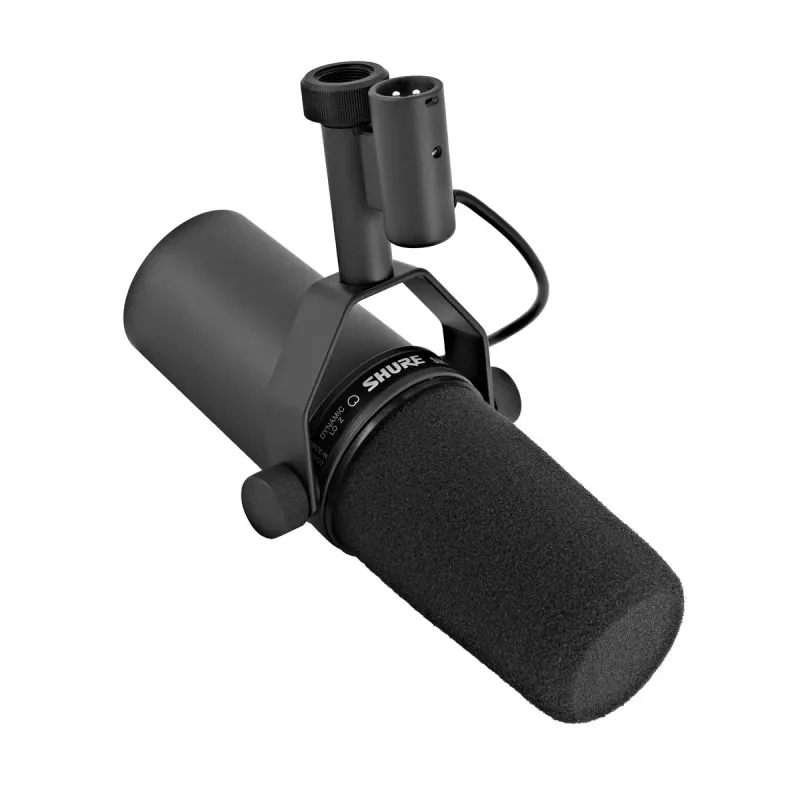
The Broadcast-Ready Performer: Shure SM7B

While the SM7B is famous as the broadcast and studio microphone of choice for everyone from Michael Jackson to Joe Rogan, don't overlook it for live vocal work. For vocalists who want that warm, intimate, controlled sound on stage without the feedback issues that plague condenser microphones, the SM7B delivers in ways that surprise even seasoned sound engineers. Its internal shock mount and built-in pop filter mean you can work the microphone aggressively — cupping the grille, moving on and off axis, singing right on top of the capsule — without handling noise or plosives ruining the sound. The frequency response is smooth with a gentle presence rise that flatters the voice without harshness. The one catch: the SM7B needs significant gain. It's a low-output microphone, so you'll want to pair it with a good console preamp, an interface with clean gain like the SSL 2+, or an inline booster like the Cloudlifter CL-1. I've seen these on major festival stages — Glastonbury, Coachella, Lollapalooza — and they hold their own against any dedicated live vocal microphone. The sound is simply more polished, more broadcast-ready, than what you get from a typical stage dynamic.
Verdict SM57 for stage, SM7B for smooth live vocals

Products in this Guide

Shure SM57

Shure SM57

★★★★½ 45,210
$99 USD
The most recorded instrument microphone in history. Indestructible, affordable, and incredible on guitar cabs, snares, and horns. Every musician should own one.
Shure SM7B

Shure SM7B

★★★★½ 18,453
$399 USD
The industry-standard dynamic microphone for broadcast, podcasting, and vocal recording. Warm, smooth sound with excellent rejection.

Final Thoughts

Buy the SM57 for instruments and all-purpose stage work — it's the standard for a reason and belongs in every live rig. Use it on guitar amps, snares, horns, and even vocals when the answer to 'what mic goes here' needs to be 'the one that always works.' The SM7B is your choice for lead vocals when you want that smooth, broadcast-quality sound in a live setting without sacrificing feedback rejection or durability. Together, the SM57 and SM7B cover every stage scenario you'll encounter — from the smallest club to the largest festival. Both will outlast your touring career and probably your next one too.

Join us on Telegram — daily sales & deals on music gear Únete a Telegram — ofertas diarias en equipo musical