

Buy the RME Babyface Pro FS if you need studio-grade conversion in a portable bus-powered format with the most stable drivers on earth. RME's SteadyClock FS jitter suppression delivers clock stability that rivals high-end standalone master clocks, making your recordings sound cleaner and more focused than any interface in its class. The Babyface's driver architecture is legendary — RME has the lowest RTL (Round Trip Latency) figures of any USB interface, and their TotalMix FX software gives you a full-featured digital mixer that works as a standalone unit. The 2 x 12 analog channels and ADAT expansion (expandable to 20 channels) make it absurdly versatile for its size. I've taken mine through airport security, hotel rooms, and tour buses — it simply works, every time, no questions asked.
RME Babyface Pro FS vs MOTU M2: Premium vs Budget Interface (2026)
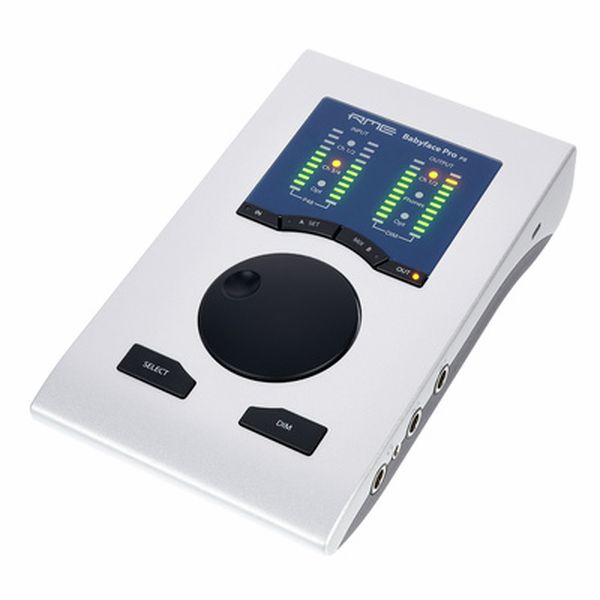
The RME Babyface Pro FS and MOTU M2 sit at opposite ends of the audio interface price spectrum — and both are class leaders in their category. The Babyface Pro FS ($949) is the gold standard for portable recording with legendary drivers and pristine conversion. The MOTU M2 ($199) is one of the best value interfaces on the market, with ESS Sabre32 DAC and class-leading specs. Choosing between them reveals what matters most for your recordings: bulletproof reliability or incredible value.
How Do They Compare?
| RME Babyface Pro FS | MOTU M2 | |
|---|---|---|
| Price | $949 USD | $199 USD |
| Key Feature | Legendary Drivers and SteadyClock FS Stability | ESS Sabre32 Ultra DAC and Hardware Loopback |
| Best For | Professional portable recording | Budget home recording |
| Brand | RME | MOTU |
| Rating | 4.9/5 | 4.6/5 |
| Preamps | 2 x RME mic pre | 2 x MOTU mic pre |
| Dynamic Range | 117 dB (AD) | 120 dB (ESS Sabre32) |
| Sample Rate | 192 kHz / 24-bit | 192 kHz / 24-bit |
| Connectivity | USB 2.0 (USB-C compatible) | USB-C |
| Latency (RTL 48kHz/64) | ~2.5 ms | ~4.5 ms |
Is the RME Babyface Pro FS the Best for Pro-Grade Portability?
Is the MOTU M2 the Best Value for Home Recording?
Buy the MOTU M2 if you want benchmark converter specs and hardware loopback at a price that leaves room for a microphone and headphones. The M2's ESS Sabre32 Ultra DAC delivers 120dB dynamic range — the same conversion technology found in interfaces costing three times as much. The full-color LCD screen provides real-time metering that's accurate enough for critical gain staging. The hardware loopback feature routes computer audio and microphone inputs into a single stream for streaming, podcasting, and online teaching without complex software routing. At $199, the M2 delivers 90% of what a $949 interface can do, making it the smartest choice for home studios where budget flexibility matters.
Drivers, Latency, and Longevity — Why RME Commands a Premium?
The $750 price difference between these interfaces comes down to three things: driver maturity, low-latency performance, and long-term support. RME's driver team releases updates that keep the Babyface compatible with new operating systems for 10+ years — the FireFace 800 from 2004 still works on Windows 11. MOTU's drivers are excellent for the price but don't match RME's sub-3ms RTL at 48kHz buffer sizes. For tracking live musicians who need real-time monitoring through plugins, RME's TotalMix FX with near-zero latency DSP routing is a genuine professional advantage. For solo recording and mixing where you monitor through your DAW, the MOTU M2's latency is perfectly adequate.
RME Babyface Pro FS or MOTU M2: Which Wins for Your Studio?
If you're a professional tracking live bands, touring, or relying on ultra-low latency for plugin monitoring, the RME Babyface Pro FS is the only choice. Its driver stability, sub-3ms latency, and 20-channel expandability justify the $949 price tag for working engineers. If you're a home producer, podcaster, or streamer recording one track at a time, the MOTU M2 at $199 frees up $750 for a better microphone, headphones, or acoustic treatment — and you'll still get recordings that punch way above their weight class.
What Products Are in This Guide?
RME Babyface Pro FS




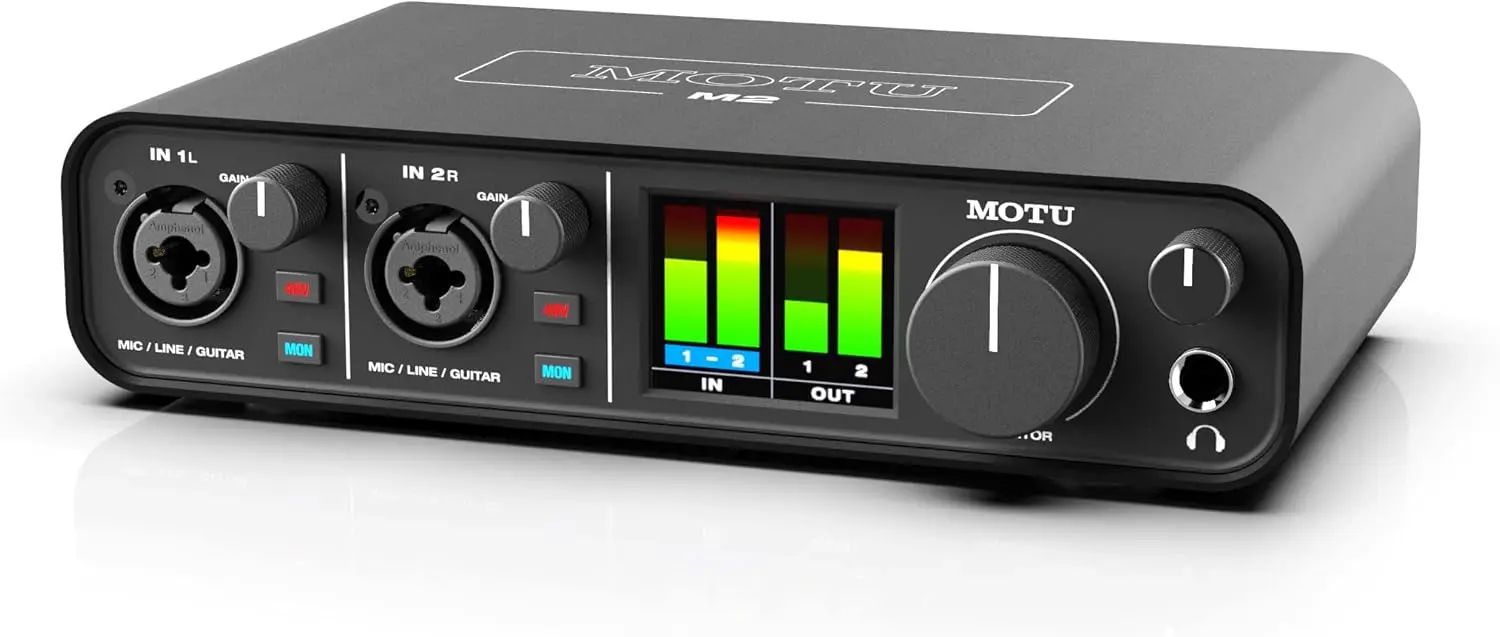
MOTU M2
What's the Bottom Line?
The RME Babyface Pro FS and MOTU M2 represent different philosophies of value. RME sells long-term reliability, industry-leading drivers, and the lowest latency of any portable interface. MOTU sells class-leading converter specs wrapped in an affordable, well-built package. The Babyface will serve a professional for a decade. The M2 gives a beginner everything they need to make great recordings today, with money left over for the next piece of gear.