Cuban Tres, Bass & Guitar - played and recorded with my personal gear
SoundBetter
Find the Best Deals Across Top Music Stores
Guides My Setup About Me

Home Studio Starter Kit: Everything You Need (Under $1,000)

Home Studio Starter Kit: Everything You Need (Under $1,000)

Building your first home studio doesn't have to break the bank. After 20+ years of recording everywhere from a cramped Santiago de Cuba bedroom to Abbey Road, I've learned one thing: you don't need expensive gear to make professional recordings. What you need is the right gear. Here's the exact starter kit I recommend to anyone asking me how to begin.

How to Choose the Best Audio Interface

Choosing the right audio interface is the most important decision for your home studio. The interface is the bridge between your microphones, instruments, and computer — every single recording passes through it.

First, count your inputs. If you're a solo singer-songwriter recording one track at a time, 2 inputs is plenty. If you record vocals and guitar simultaneously, or plan to record stereo sources, look for 4 or more inputs. For podcasters and streamers, 2 inputs with loopback functionality is ideal.

Preamps matter more than specs. A great preamp adds clarity and headroom; a poor one adds noise and muddiness. Focusrite's Air mode, SSL's 4K legacy EQ, and UA's Unison technology each bring different flavours. If you want clean and transparent, RME and MOTU are top choices. If you want character, SSL or UA will give your recordings instant vibe.

Connectivity determines your workflow. USB-C is the standard for modern interfaces — it's fast, reliable, and works with everything. Thunderbolt offers lower latency for large track counts but costs more. If you're on a laptop and travel, bus-powered interfaces save you from carrying an extra power supply.

Don't overlook driver quality. A great interface with bad drivers is unusable. RME is legendary for rock-solid drivers with ultra-low latency. Focusrite and MOTU are also excellent. Check that your interface has ASIO support on Windows or class-compliant mode on iPad.

Budget wisely. The sweet spot for home studios is $200-500. Below $200 you get basic functionality; above $500 you enter pro-sumer territory with better converters and build quality. My rule: spend more on your interface than your microphone — a great signal chain starts with a clean input.
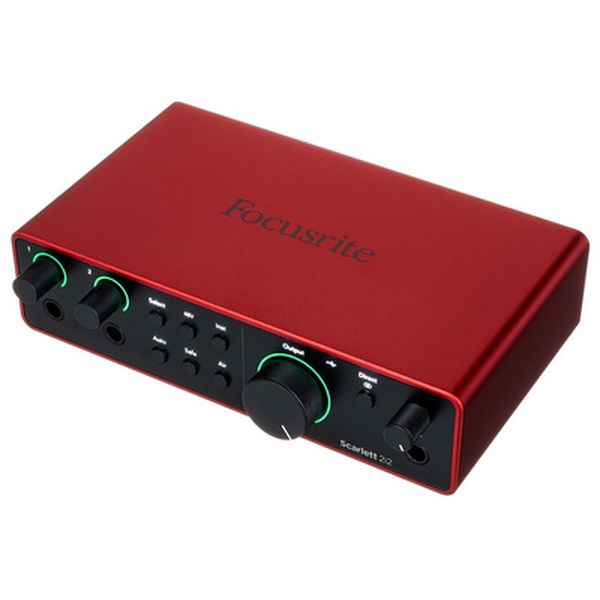

Start Here: The Audio Interface

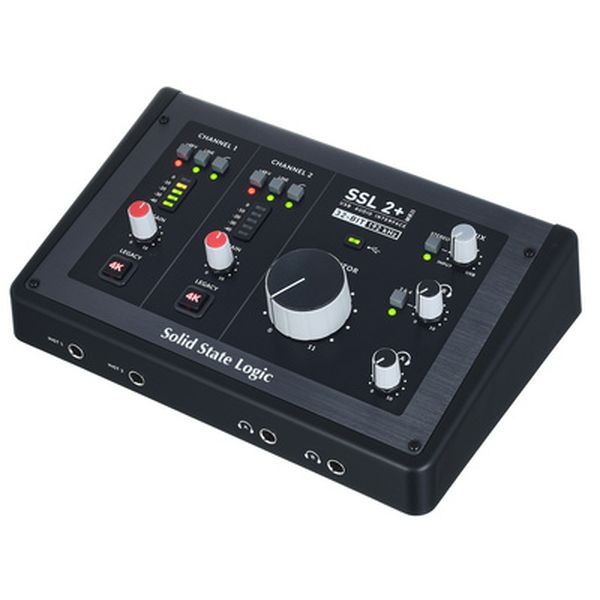
Your interface is the command center. It converts your microphone and instrument signals into digital audio your computer can work with. For a starter studio, you want something reliable, low-latency, and easy to use. I've personally used the Focusrite Scarlett 2i2 for years — it's the best-selling interface on the planet for good reason. Clean preamps, solid build, and it just works. If you want a bit more character, the SSL 2+ MKII brings that legendary British console sound to your home studio for not much more.

The Microphone: Your Most Important Tool

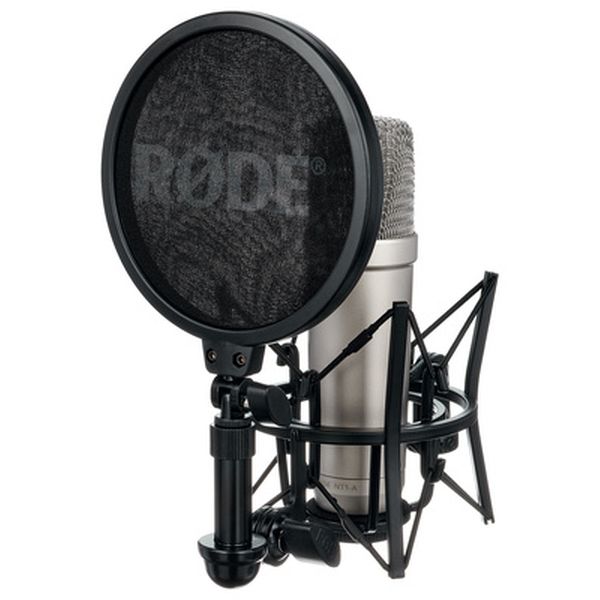
You need one versatile mic that can handle vocals, guitar amps, and podcasts. My pick? The Shure SM57. It's $99, indestructible, and it's been used on more hit records than anything else in history. When you're ready to capture cleaner vocals and acoustic instruments, add the Rode NT1-A — it's the world's quietest condenser mic and comes with a shock mount and pop filter included.

Headphones for Mixing

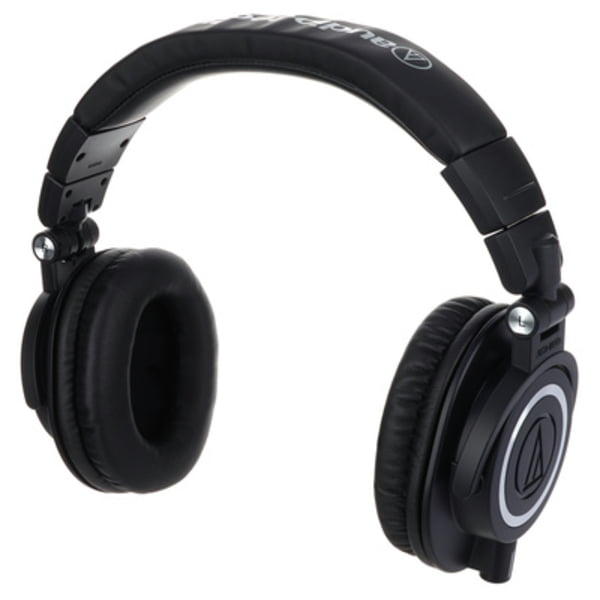
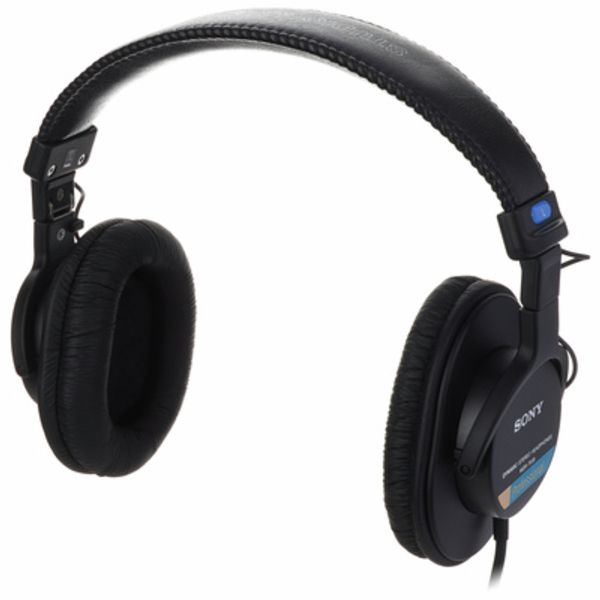
Skip cheap headphones. You need something that tells you the truth about your mix. The Audio-Technica ATH-M50x are my top recommendation for beginners — they're comfortable, detailed, and translate well to other systems. Tight budget? The Sony MDR-7506 has been the broadcast standard since 1991 and costs under $100.

Studio Monitors: Hear the Truth

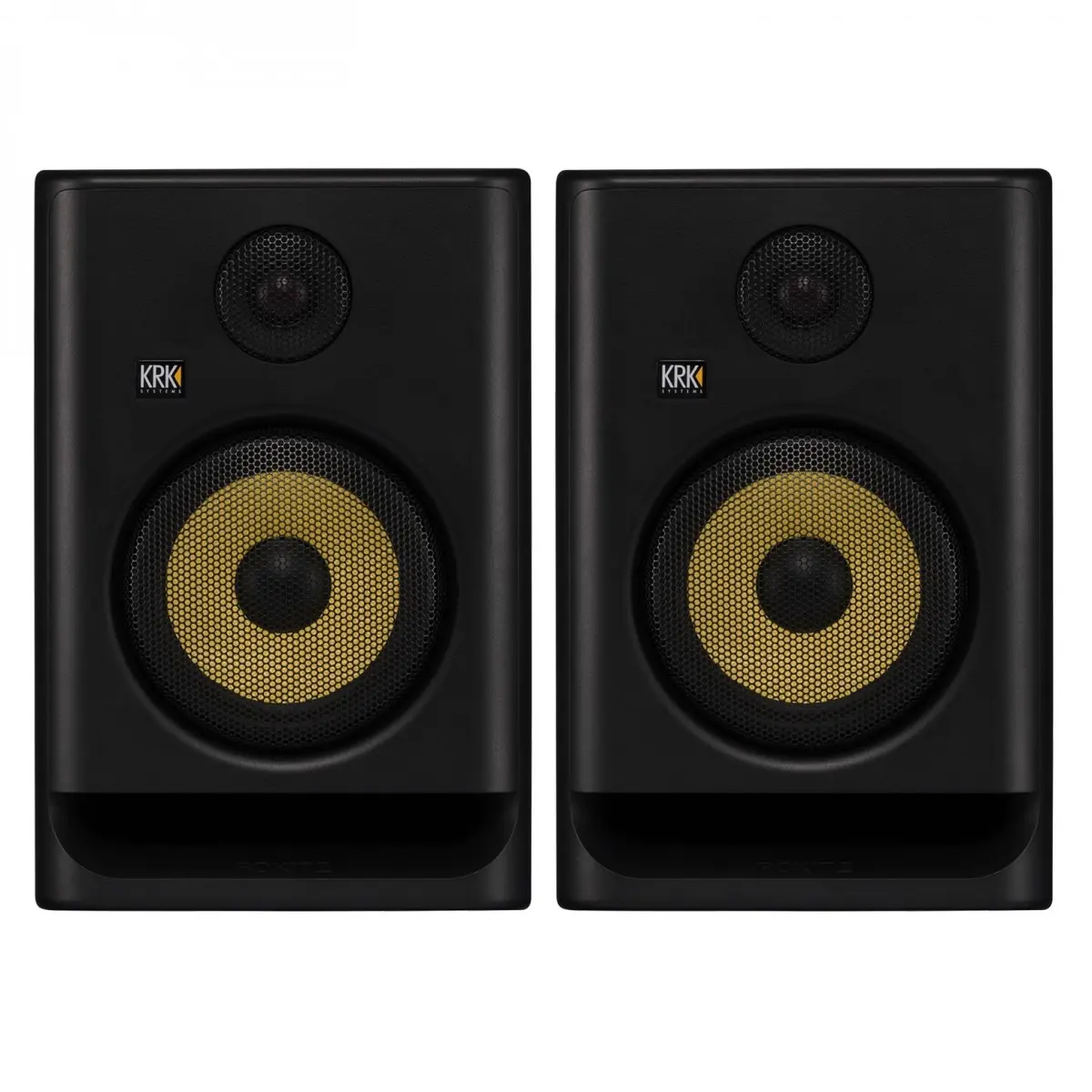
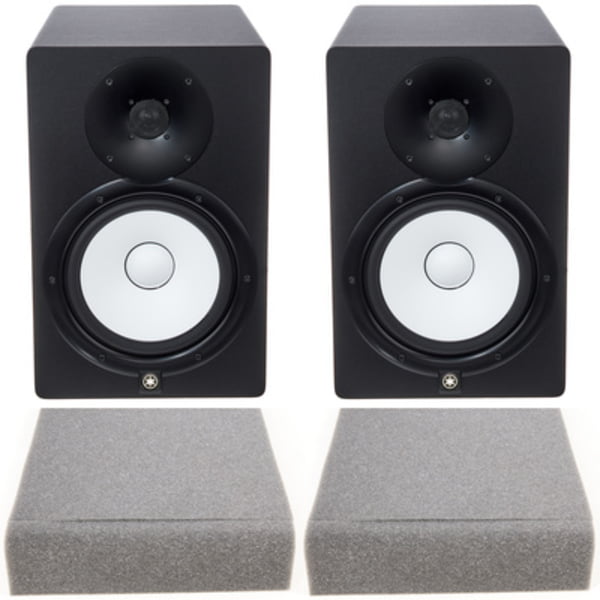
Headphones are great for tracking and late-night mixing, but you need real speakers to hear how your mix translates to the physical world. The KRK Rokit 7 G5 is the best-selling monitor for beginners — punchy, detailed, and the built-in DSP EQ lets you tune them to your room. Working with a tighter budget? The KRK Rokit 5 G5 gives you the same DSP magic in a smaller package for $189 each. If you can stretch a bit, the Yamaha HS8 is the brutally honest industry standard that reveals every flaw in your mix — perfect for learning what a great mix actually sounds like.

Accessories You Actually Need

Don't waste money on things you don't need. Get a solid mic stand — the K&M 210/2 is German-engineered and will outlast everything else in your studio. A Mogami Gold XLR cable ensures clean signal from day one. That's it. You can add acoustic treatment and pop filters later.
Verdict Best overall starter studio

Products in this Guide

Focusrite Scarlett 2i2 4th Gen

Focusrite Scarlett 2i2 4th Gen

★★★★½ 34,567
$199 USD
The world's best-selling audio interface just got better. 120dB dynamic range, Air mode, and Loopback for streaming. Studio-grade conversion.
SSL 2+ MKII

SSL 2+ MKII

★★★★½ 8,901
$299 USD
Solid State Logic in an interface. Legendary SSL 4K preamps, Legacy 4K analogue channel strip, and professional monitoring features. Updated MKII with 32-bit/192kHz converters.
Shure SM57

Shure SM57

★★★★½ 45,210
$99 USD
The most recorded instrument microphone in history. Indestructible, affordable, and incredible on guitar cabs, snares, and horns. Every musician should own one.
Rode NT1-A

Rode NT1-A

★★★★½ 21,345
$269 USD
The world's quietest studio condenser microphone. Pristine audio quality with a warm, smooth character. Includes shock mount and pop filter.
Audio-Technica ATH-M50x

Audio-Technica ATH-M50x

★★★★½ 45,678
$169 USD
The most popular studio headphones in the world. Critically acclaimed clarity, deep bass, and collapsible design for portability.
Sony MDR-7506

Sony MDR-7506

★★★★½ 56,789
$99 USD
The broadcast standard since 1991. Closed-back, collapsible, and incredibly reliable. Trusted by professionals worldwide.
KRK Rokit 7 G5

KRK Rokit 7 G5

★★★★½ 18,907
$498 USD
Professional bi-amped studio monitors with Kevlar drivers, DSP-driven EQ, and a front-firing bass port. G5 features 32-bit processing and enhanced room correction.
Yamaha HS8

Yamaha HS8

★★★★½ 12,345
$698 USD
The industry standard for mixing. 8-inch cone woofer with Kevlar coating, 1-inch dome tweeter, and room control for accurate monitoring.

Final Thoughts

With this setup — Scarlett 2i2, SM57, ATH-M50x, KRK Rokit 7 G5, a K&M stand, and a Mogami cable — you can record, mix, and release professional music for under $1,000. I've tracked sessions with exactly this chain and the results are broadcast-ready. Start here, learn your craft, and upgrade only when your skill outgrows your gear.

Join us on Telegram — daily sales & deals on music gear Únete a Telegram — ofertas diarias en equipo musical