Cuban Tres, Bass & Guitar - played and recorded with my personal gear
SoundBetter
Find the Best Deals Across Top Music Stores
Guides My Setup About Me

Best High-End Audio Interfaces (2026)

Best High-End Audio Interfaces (2026)

When you graduate from entry-level interfaces, you enter a world where conversion quality, clocking precision, and preamp character become audible differences — not just spec sheet numbers. I've tracked through consumer interfaces and $10,000 converters, and the jump to high-end is real. Here are the two interfaces that deliver professional studio quality without entering mortgage territory.

How to Choose the Best Audio Interface

Choosing the right audio interface is the most important decision for your home studio. The interface is the bridge between your microphones, instruments, and computer — every single recording passes through it.

First, count your inputs. If you're a solo singer-songwriter recording one track at a time, 2 inputs is plenty. If you record vocals and guitar simultaneously, or plan to record stereo sources, look for 4 or more inputs. For podcasters and streamers, 2 inputs with loopback functionality is ideal.

Preamps matter more than specs. A great preamp adds clarity and headroom; a poor one adds noise and muddiness. Focusrite's Air mode, SSL's 4K legacy EQ, and UA's Unison technology each bring different flavours. If you want clean and transparent, RME and MOTU are top choices. If you want character, SSL or UA will give your recordings instant vibe.

Connectivity determines your workflow. USB-C is the standard for modern interfaces — it's fast, reliable, and works with everything. Thunderbolt offers lower latency for large track counts but costs more. If you're on a laptop and travel, bus-powered interfaces save you from carrying an extra power supply.

Don't overlook driver quality. A great interface with bad drivers is unusable. RME is legendary for rock-solid drivers with ultra-low latency. Focusrite and MOTU are also excellent. Check that your interface has ASIO support on Windows or class-compliant mode on iPad.

Budget wisely. The sweet spot for home studios is $200-500. Below $200 you get basic functionality; above $500 you enter pro-sumer territory with better converters and build quality. My rule: spend more on your interface than your microphone — a great signal chain starts with a clean input.

The DSP Powerhouse: Universal Audio Apollo Twin X

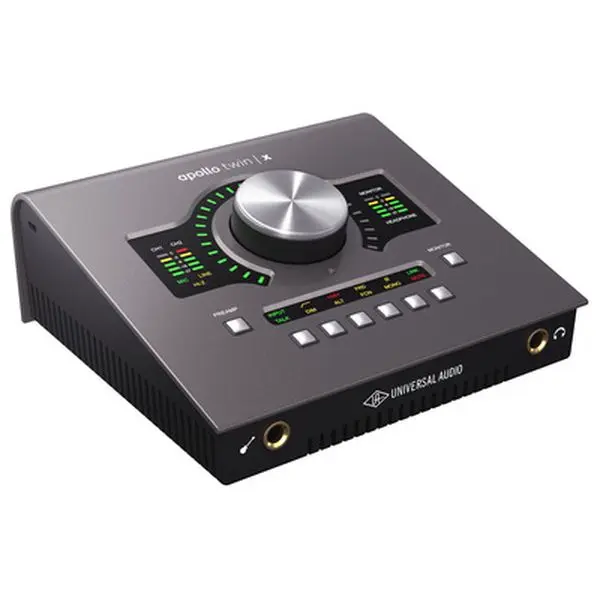
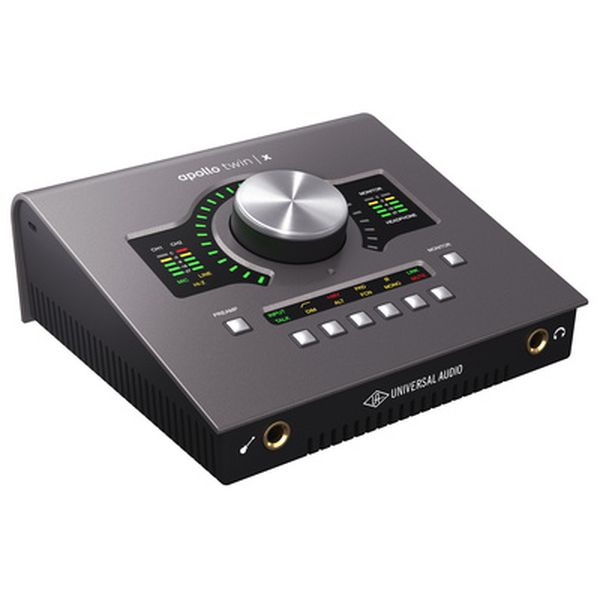
The Apollo Twin X gives you real-time UAD DSP processing — tracking through emulations of vintage Neve preamps, LA-2A compressors, Pultec EQs, and EMT reverbs with near-zero latency. The Unison preamp technology physically changes impedance to match the hardware being modeled — it's not just an EQ curve, it's the actual analog behavior. The Apollo ecosystem includes over 200 UAD plugins that run on the interface's DSP, offloading your computer. For serious projects, this is the interface pros choose for home studios.

The Swiss Watch: RME Babyface Pro FS

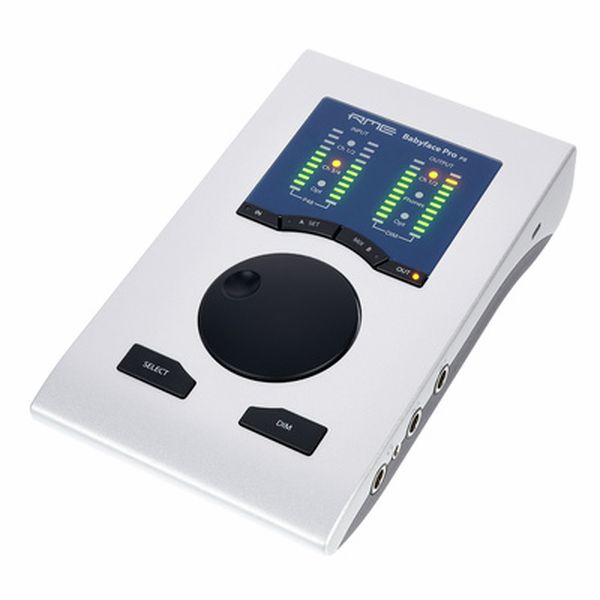
RME doesn't chase marketing trends — they engineer for professionals who cannot afford a single glitch in a paid session. The Babyface Pro FS is their portable flagship, and its SteadyClock FS jitter suppression is the industry benchmark. The TotalMix FX software is a full digital mixer with per-channel EQ, dynamics, and reverb running on the interface's FPGA — zero latency, zero CPU load. The drivers are so stable that RME interfaces from 2001 still work on modern operating systems. If absolute reliability and pristine conversion are your priority, RME is the gold standard.
Verdict Apollo Twin X for DSP, Babyface Pro FS for drivers

Products in this Guide

Universal Audio Apollo Twin X

Universal Audio Apollo Twin X

★★★★½ 5,678
$899 USD
Professional-grade Thunderbolt interface with UAD DSP processing. Real-time UAD plugins with near-zero latency. Unison preamps.
RME Babyface Pro FS

RME Babyface Pro FS

★★★★½ 3,456
$949 USD
The gold standard for portable recording. Legendary RME drivers, SteadyClock FS jitter suppression, and pristine AD/DA conversion.

Final Thoughts

The Apollo Twin X is for producers and engineers who want track-through effects and legendary analog sound in real time. The Babyface Pro FS is for professionals who demand the lowest latency, the most stable drivers, and the most transparent conversion in the industry. Both are lifetime purchases that will outlast multiple computer upgrades — you buy these once.

Join us on Telegram — daily sales & deals on music gear Únete a Telegram — ofertas diarias en equipo musical