Cuban Tres, Bass & Guitar - played and recorded with my personal gear
SoundBetter
Find the Best Deals Across Top Music Stores
Guides My Setup About Me

Yamaha HS8 vs KRK Rokit 7 G5: Flat vs Colored Monitors (2026)
Yamaha HS8 vs KRK Rokit 7 G5: Flat vs Colored Monitors (2026)

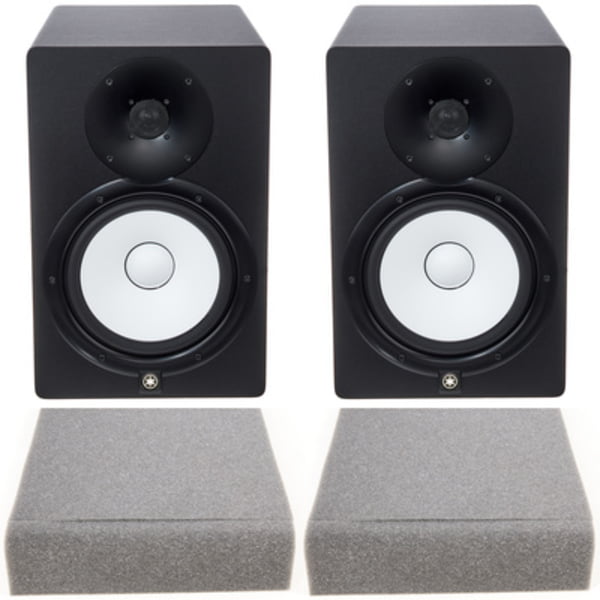
The Yamaha HS8 and KRK Rokit 7 G5 are the two most debated studio monitors in the under-$700 range. The HS8 is flat, clinical, and unforgiving — the industry standard for mixing. The Rokit 7 G5 is warm, punchy, and flattering — the favorite of beat-makers and producers who want their tracks to sound good while making them. I've mixed albums on both. Here's the honest truth about which one you actually need.

Yamaha HS8: The Truth-Teller

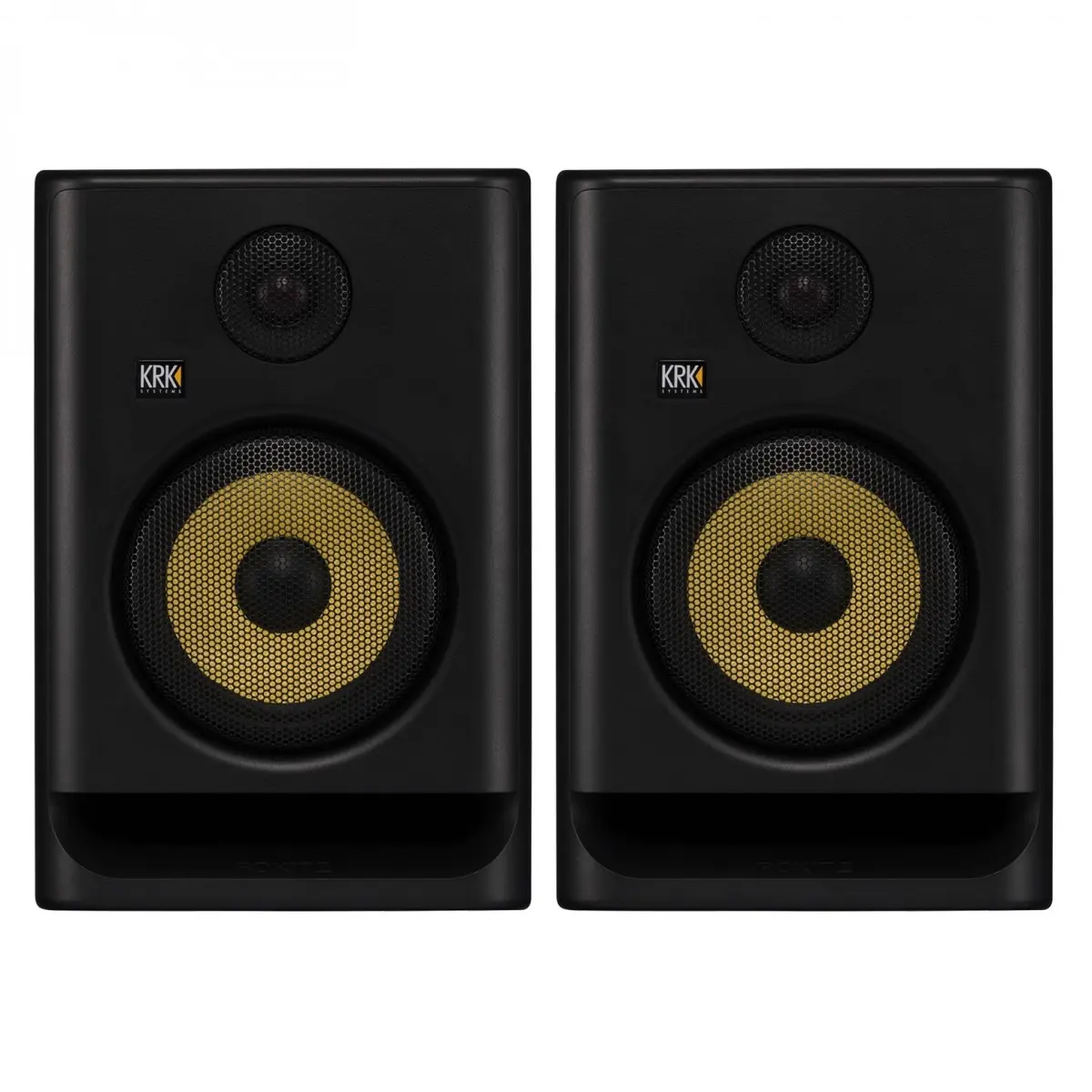
The Yamaha HS8 is the monitor equivalent of putting on glasses after years of blurry vision. The white cone and bass port are iconic for a reason — they reveal every flaw in your mix. The 8-inch Kevlar woofer delivers tight, controlled bass without exaggeration. The room control switches (high trim, mid trim, low cut) let you tune them to your space. If you want your mixes to translate perfectly to cars, earbuds, and club systems, the HS8 is your answer. They're unforgiving — and that's the point.

KRK Rokit 7 G5: The Flatterer

The KRK Rokit 7 G5 makes everything sound good. The Kevlar driver delivers punchy lows and smooth highs with a warmth that's instantly satisfying. The fifth generation added 32-bit DSP processing and an improved waveguide for better stereo imaging. The front-firing bass port means you can place them closer to walls without muddying the low end. For beat-making, hip-hop, and electronic production, the Rokit's colored response helps you feel the music — and makes long sessions less fatiguing. You'll enjoy producing more. But your mixes might not translate as well.

The Bass Problem: 8" vs 7"

The HS8's 8-inch woofer reaches deeper (38Hz vs 43Hz) with tighter response. The Rokit 7 G5's 7-inch woofer is punchier in the mid-bass but rolls off sooner. The real issue: in an untreated room, both will give you inaccurate bass. The HS8's extended low end can actually be a problem in small rooms — you'll hear bass nodes and nulls that don't exist in your mix. The Rokit's front-firing port and DSP EQ give you more placement flexibility. Either way, bass traps are non-negotiable for accurate low-end monitoring.

Verdict: Which Should You Buy?

If you mix and master for other artists or need your tracks to translate everywhere: Yamaha HS8 ($698/pair). They're unforgiving but trustworthy — your mixes will sound better everywhere. If you make beats, produce your own music, or want an enjoyable listening experience while working: KRK Rokit 7 G5 ($498/pair). They're more forgiving and make production fun. The honest answer: many professionals own BOTH. Mix on the HS8, vibe on the Rokit. But if you can only buy one, your workflow decides — do you need truth or inspiration?
Verdict Yamaha HS8 for accuracy ($698), KRK Rokit 7 G5 for vibe ($498) — or both if you can

Products in this Guide

Yamaha HS8
Yamaha HS8

★★★★½ 12,345
$698 USD
The industry standard for mixing. 8-inch cone woofer with Kevlar coating, 1-inch dome tweeter, and room control for accurate monitoring.
KRK Rokit 7 G5

KRK Rokit 7 G5

★★★★½ 18,907
$498 USD
Professional bi-amped studio monitors with Kevlar drivers, DSP-driven EQ, and a front-firing bass port. G5 features 32-bit processing and enhanced room correction.

Final Thoughts

The Yamaha HS8 and KRK Rokit 7 G5 represent two different philosophies of monitoring. The HS8 gives you surgical precision — every mix decision translates, but you'll hear every mistake. The Rokit 7 G5 makes production enjoyable — you'll work faster and have more fun, but your mixes might need extra checking on other systems. Neither is wrong. The question is whether you want a monitor that shows you exactly what you did — or one that makes you want to keep creating.

Join us on Telegram — daily sales & deals on music gear Únete a Telegram — ofertas diarias en equipo musical