


 Gear4Music
 Andertons
 Music Store
 zZounds
 Plugin Boutique
If you record interviews or run multi-cam shoots and cannot afford a lost take, the Rode Wireless PRO wins. It carries 32GB of 32-bit float recording per transmitter — about 40 hours — plus timecode to sync cameras in post, locking lavalier connectors and GainAssist that watches the levels for you. The DJI Mic 2 is the smarter pick for phone-first creators: it pairs straight to your phone or Osmo device over Bluetooth with no receiver, cleans up noisy rooms with one-touch noise cancelling, and still backs up to its 8GB of 32-bit float storage. The Rode is the insurance policy; the DJI is the everyday tool.
Rode Wireless PRO vs DJI Mic 2: Best Wireless Mic for Interviews & Vlogs
The Rode Wireless PRO and the DJI Mic 2 are the two dual-channel kits every creator compares when the budget stretches past the cheap clip-on mics, and both can record a backup track on the transmitter itself so a lost wireless link never costs you the take. I have used both on interviews, on-camera shoots and loud festival grounds to find out where the extra money actually goes — because on paper they look like twins, but on the job they are not.
Verdict
The Rode Wireless PRO is for professional interviews and multi-cam shoots where internal recording and backup reliability matter. The DJI Mic 2 is for fast, phone-first content creation with easy pairing and a great all-round experience.
Rode Wireless PRO
Pros
- 32GB of 32-bit float recording per transmitter — about 40 hours per TX
- Timecode syncs audio to every camera without an external box
- Locking 3.5mm lavalier connectors survive tugs on the cable
- GainAssist rides the gain automatically in changing environments
- 260m range and up to 22 hours of battery with the charging case
Cons
- It is a premium price when you only need phone content
- Most deep settings live in the Rode Central app, not on the device
- Transmitters are bulkier than the featherweight DJI units
- No built-in noise cancelling — you clean up noisy rooms in post
- Files are large and must be exported through Rode Central rather than a simple file browser
DJI Mic 2
Pros
- Direct Bluetooth pairing to phones and Osmo devices — no receiver needed
- One-touch intelligent noise cancelling cleans up busy environments
- OLED touchscreen receiver with a physical dial for in-field control
- 32-bit float backup recording protects you from common disasters
- undercuts the Rode while keeping a charging case and windscreens
Cons
- 8GB per transmitter is a quarter of the Rode storage
- No professional timecode for multi-cam sync
- Aggressive noise cancelling can smear your voice in extreme rooms
- Bluetooth phone pairing disables noise cancelling and internal recording
- No locking lavalier connectors — a cable tug can unplug the mic mid-take
How Do They Compare?
| Rode Wireless PRO | DJI Mic 2 | |
|---|---|---|
| Type | Dual-channel wireless lavalier system | Dual-channel wireless lavalier system |
| Best For | Interviews, multi-cam and paid shoots | Phone-first content and vlogging |
| Onboard Storage | 32GB per transmitter | 8GB per transmitter |
| Recording Format | 32-bit float | 32-bit float / 24-bit |
| Wireless Range | Up to 260m | Up to 250m |
| Battery Life | 7h per TX (22h with case) | 6h per TX (18h with case) |
| Timecode | Yes | No |
| Direct Phone Pairing | No (receiver required) | Yes, via Bluetooth |
| Noise Cancelling | No | One-touch intelligent |
The Quick Answer: Rode Wireless PRO vs DJI Mic 2
Why the Rode Wireless PRO Is the Professional Safety Net
The Wireless PRO is built around one idea: you never lose a take. Each transmitter records 32-bit float to its own 32GB, and the format is forgiving enough that a recording that is far too loud or too quiet can still be recovered in post. Timecode syncs the audio to every camera without an external timecode box, the locking 3.5mm connectors stop a tug from killing the lav, and GainAssist rides the gain automatically so you can walk into any room without riding levels. Rode rates the range at 260m and the transmitters run about 7 hours — up to 22 with the charging case. The catch is that most deep settings live in the Rode Central app, not on the tiny screen, so you configure it before you go out.
Why the DJI Mic 2 Is the Everyday Creator Pick
The DJI Mic 2 is the kit that gets out of your way. The transmitters connect over Bluetooth straight to an iPhone, Android or a DJI Osmo device — no receiver in the chain for phone work — and the receiver has a proper OLED touchscreen plus a physical dial, so most settings are a tap away in the field. Intelligent noise cancelling cleans up streets, cafes and wind on one button press, and each transmitter still records a 32-bit float backup to 8GB (around 14 hours at 24-bit). Battery is about 6 hours per transmitter, roughly 18 with the case. DJI rates the range at 250m. The trade-offs are real: 8GB is a quarter of the Rode storage, there is no professional timecode, and the noise cancelling can smear your voice if the room is truly extreme.
The Verdict: Insurance or Everyday Tool?
The deciding question is how you record. If you shoot interviews, documentaries or multi-cam events where a clipped or lost take costs real money, the Rode Wireless PRO is worth every dollar: four times the storage, timecode, locking connectors and GainAssist make it the safer system for paid work. If you mostly film yourself with a phone or an Osmo pocket gimbal, the DJI Mic 2 is the better daily driver — the direct Bluetooth pairing, touchscreen receiver and one-touch noise cancelling save you time every single shoot, and its backup recording still protects you from the common disasters. Buy the Rode for professional shoots where failure is expensive, buy the DJI for fast, phone-first content creation.
⚠️ Attention:Prices may vary depending on your location; your final total is confirmed in your local currency at checkout. Each store applies its own shipping policy: some offer completely free shipping, others charge a shipping fee, and others provide free shipping above a minimum order amount. Additionally, some stores only ship within the U.S.
Conclusion
The Rode Wireless PRO wins for professional interviews and multi-cam work: 32GB of 32-bit float per transmitter, timecode and locking connectors protect paid shoots. The DJI Mic 2 wins for phone-first creators with direct Bluetooth pairing, a touchscreen receiver and one-touch noise cancelling.
Want the full picture? See the best wireless lapel mics guide, the best mics for content creators, and the best microphones.
Frequently Asked Questions
What Products Are in This Guide?
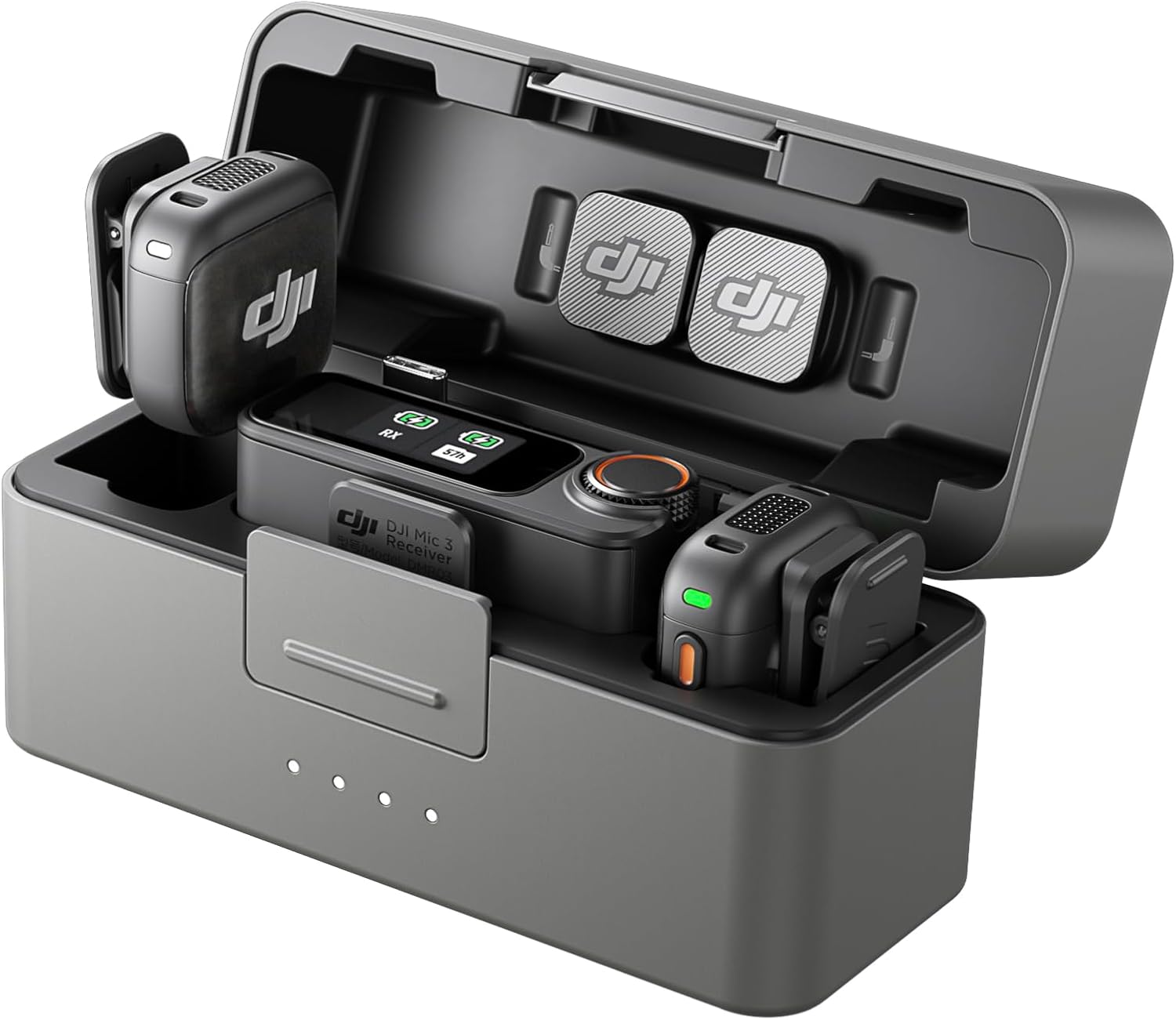
DJI Mic 2 (2TX + 1RX + Charging Case)
DJI's Mic 2 kit bundles two wireless clip-on mics, a receiver and a charging case. It records 32-bit float with a backup track, reaches up to 250m, runs up to 18 hours and layers in intelligent noise cancelling, making it a favorite for creators who shoot interviews on the move.
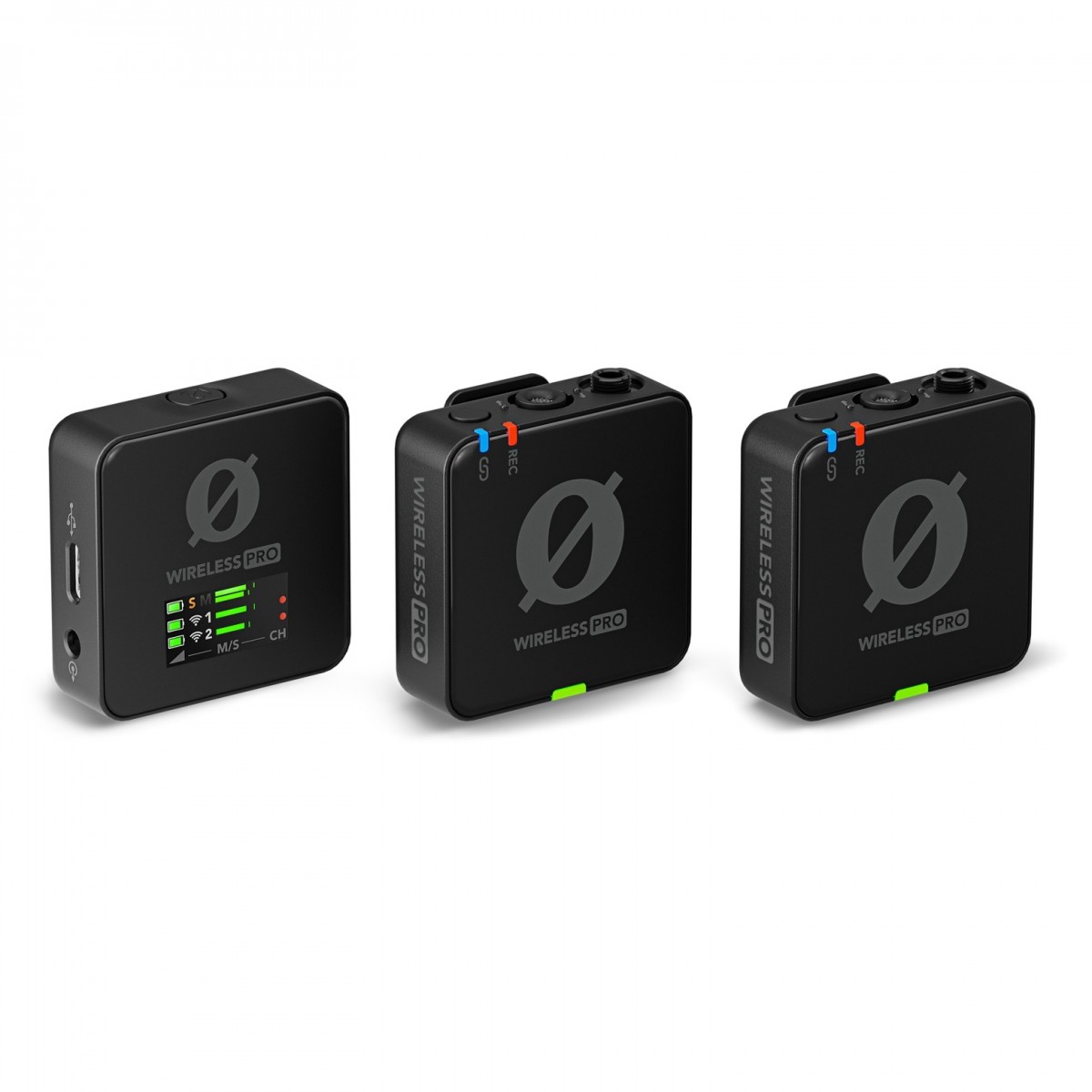
Rode Wireless PRO
Rode's Wireless PRO is a dual-channel wireless system with 32-bit float on-board recording, timecode sync and GainAssist. Each transmitter stores up to 32GB internally and the whole kit records 40 hours, which makes it the go-to for interview-heavy content that cannot afford a failed take.
Reviews
(0 reviews)
Cuban Tres, Bass & Guitar - played and recorded with my personal gear