Cuban Tres, Bass & Guitar - played and recorded with my personal gear
SoundBetter
Find the Best Deals Across Top Music Stores
Guides My Setup About Me

Best Open-Back Headphones for Mixing (2026)

Best Open-Back Headphones for Mixing (2026)

When you're mixing, you need the truth, and an open-back headphone is the closest thing I've found to hearing my mix through a pair of great studio monitors without having to treat my room. Open-back designs let air pass through the ear cups, which eliminates pressure build-up and prevents resonant chambers from coloring the low end. The result is a soundstage that feels natural and speaker-like — instruments have width, depth, and separation in a way closed-back headphones just can't achieve. I've been mixing on open-back cans for over fifteen years, and every time I switch from closed to open, I hear things I missed. You hear what's actually in your mix, not what the headphone's cavity resonance is adding. Here are the two open-back headphones I trust most for critical mixing decisions in my own studio.

How to Choose the Best Studio Headphones

Studio headphones are one of the most personal gear decisions you'll make. Unlike speakers, headphones bypass your room acoustics completely, giving you a direct window into your mix — but they also exaggerate stereo imaging and can fool you about bass response.

Open-back vs closed-back is the first decision. Open-back headphones have perforated ear cups that let air through, creating a wider soundstage and more natural frequency response. They're ideal for critical mixing and mastering. Closed-back headphones seal around your ears, blocking external noise and preventing sound leakage. They're essential for tracking vocals and recording with microphones, since open-back headphones bleed sound into the mic.

Impedance and sensitivity affect what you can drive. High-impedance headphones (250Ω+) need a dedicated headphone amp to sound their best. Low-impedance (32-80Ω) work well with audio interfaces, laptops, and phones. If you're using a standard audio interface, stick with low-impedance models unless you plan to buy a separate headphone amp.

Frequency response tells you how honest the headphones are. Flat/neutral headphones reveal the truth about your mix. Coloured headphones with boosted bass or treble are fun for listening but dangerous for mixing — you'll compensate by cutting frequencies that aren't really there.

Comfort is non-negotiable for long sessions. Look for velour or memory foam ear pads, lightweight designs (under 300g), and adjustable headbands with adequate clamping force. I've mixed for 8-hour sessions without fatigue — that's the comfort level you should aim for.


The Reference Standard: Sennheiser HD 600

The Sennheiser HD 600 has been the mixing engineer's reference headphone for decades, and nothing has dethroned it. I bought my first pair in 2008 and I'm still using them today — that's how durable and timeless these cans are. The frequency response is so neutral that mixes I've made on HD 600s translate perfectly to my studio monitors, my car stereo, my laptop speakers, and even earbuds. There's no hyped bass to fool you into thinking your low end is bigger than it is, and no scooped mids to hide problems in the 500Hz to 2kHz range where most vocal and guitar energy lives. I've compared these directly against headphones costing $2,000 or more, and for pure mixing accuracy, the HD 600 holds its ground without breaking a sweat. The open-back design gives you a wide, natural soundstage that closed-back headphones simply cannot replicate — I can pan a guitar hard left and a piano hard right and hear them as distinct, three-dimensional objects in space. If you want to know what your mix actually sounds like before you release it to the world, start here. The HD 600 doesn't flatter your mix — it reveals it.

The Versatile Performer: Audio-Technica ATH-M50x

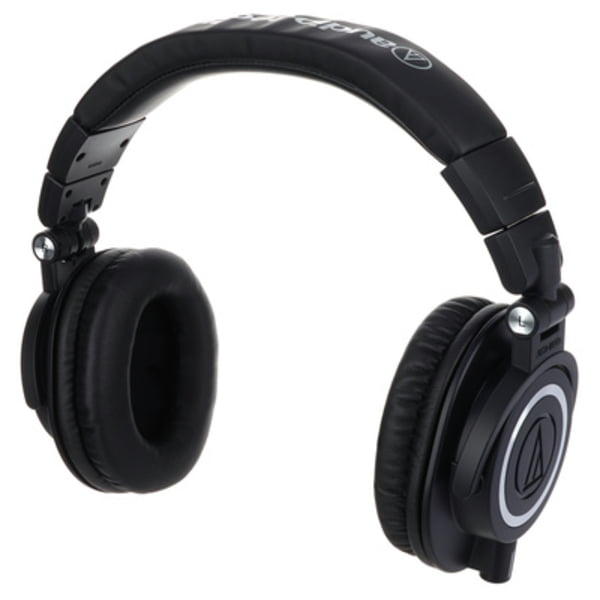
The ATH-M50x are technically closed-back headphones, but I'm including them here because their soundstage is surprisingly wide for a closed design, and they're what most people actually buy when they want one headphone that does everything. I've recommended these more than any other headphone in my entire career, and here's why: if you can only own one pair — for tracking vocals, mixing roughs, checking edits, and casual listening — the M50x is the most versatile option on the market. The 45mm drivers deliver clarity and punch that compete with headphones at twice the price. The bass is slightly emphasized, which makes them fun to listen to, but you need to learn how that emphasis translates to other systems. I tell my students: spend a week listening to your favorite reference tracks on the M50x, then compare on your speakers. Once you know the M50x's bass character, you can make mix decisions that hold up anywhere. The collapsible design, removable cable, and included carrying pouch make them the best travel companion I've ever owned. I've taken mine to sessions in four different countries.
Verdict HD 600 for pure mixing, ATH-M50x for versatility

Products in this Guide

Sennheiser HD 600

Sennheiser HD 600

★★★★½ 18,907
$399 USD
Audiophile open-back reference headphones. Natural, neutral sound with incredible detail. The mixing engineer's choice for critical listening.
Audio-Technica ATH-M50x

Audio-Technica ATH-M50x

★★★★½ 45,678
$169 USD
The most popular studio headphones in the world. Critically acclaimed clarity, deep bass, and collapsible design for portability.

Final Thoughts

If mixing accuracy is your only priority, get the HD 600 — it's the most honest headphone under $1,000 and possibly over. I've done final mix decisions on the HD 600 that translated flawlessly to mastering-grade monitors, and that's the highest compliment I can give. If you need one headphone for everything including some open-back feel and the versatility to track, mix, and travel, the ATH-M50x is the practical choice that has never let me down. Ideally, own both: HD 600 for critical mixing, M50x for tracking and everyday use. That's the studio setup I run and I've never looked back.

Join us on Telegram — daily sales & deals on music gear Únete a Telegram — ofertas diarias en equipo musical