Cuban Tres, Bass & Guitar - played and recorded with my personal gear
Guides My Setup About Me

Best Dynamic Mic for Recording Guitar Amps at Home (2026)

Best Dynamic Mic for Recording Guitar Amps at Home (2026)

Recording a guitar amplifier has its own rules. Sound pressure levels from a cranked amp exceed 120 dB SPL, and not every mic handles that well. Dynamic mics are the most practical choice: they handle high SPL, reject room noise, and deliver a focused sound that sits well in a mix. These are the ones worth considering.

Why Dynamic Mics Work Better on Guitar Cabinets

Dynamic microphones use a moving coil that converts sound pressure into an electrical signal. Their design makes them naturally resistant to high volume levels. A guitar amp cranked all the way can put out over 120 dB SPL. A condenser mic can distort at those levels. A dynamic mic won't.

Another advantage: dynamics are directional. They primarily capture what's in front of them and reject sound coming from the sides and behind. In a room with no acoustic treatment, this makes a huge difference. The mic hears the speaker, not the room reverb.

The frequency response of most dynamics includes a presence peak between 3 and 6 kHz. That emphasis helps the guitar cut through the mix without aggressive EQ. It's one of the reasons the SM57 became the standard for guitar.

Shure SM57Shure SM7BSennheiser MD 421

Shure SM57: The Standard Since the 1970s

The Shure SM57 costs around $99 and is the most widely used microphone for recording guitar amps in the history of recorded music. It's not the most expensive or the most technically sophisticated, but its frequency response is purpose-built for this job: it tightens the low end, adds a midrange push around 5 kHz, and tames harsh highs. The result is a guitar that sits in the mix without fighting the bass or the vocals.

Mic placement matters more than the mic itself. The common approach is to place the SM57 right against the grille, aimed at the edge of the cone where it meets the dust cap, at roughly a 30-degree angle. From there, small movements change the tone: toward the center gives more attack and bite; toward the edge gives more body and warmth. It's worth spending time moving the mic and listening to how the sound changes.

The SM57 also handles drums, brass instruments, and many other sources well. If you can only buy one mic for recording amps, the SM57 is the most practical choice. For the differences between the SM57 and its vocal sibling, see our SM57 vs SM58 comparison.

Shure SM57

Sennheiser MD 421: When You Need More Body

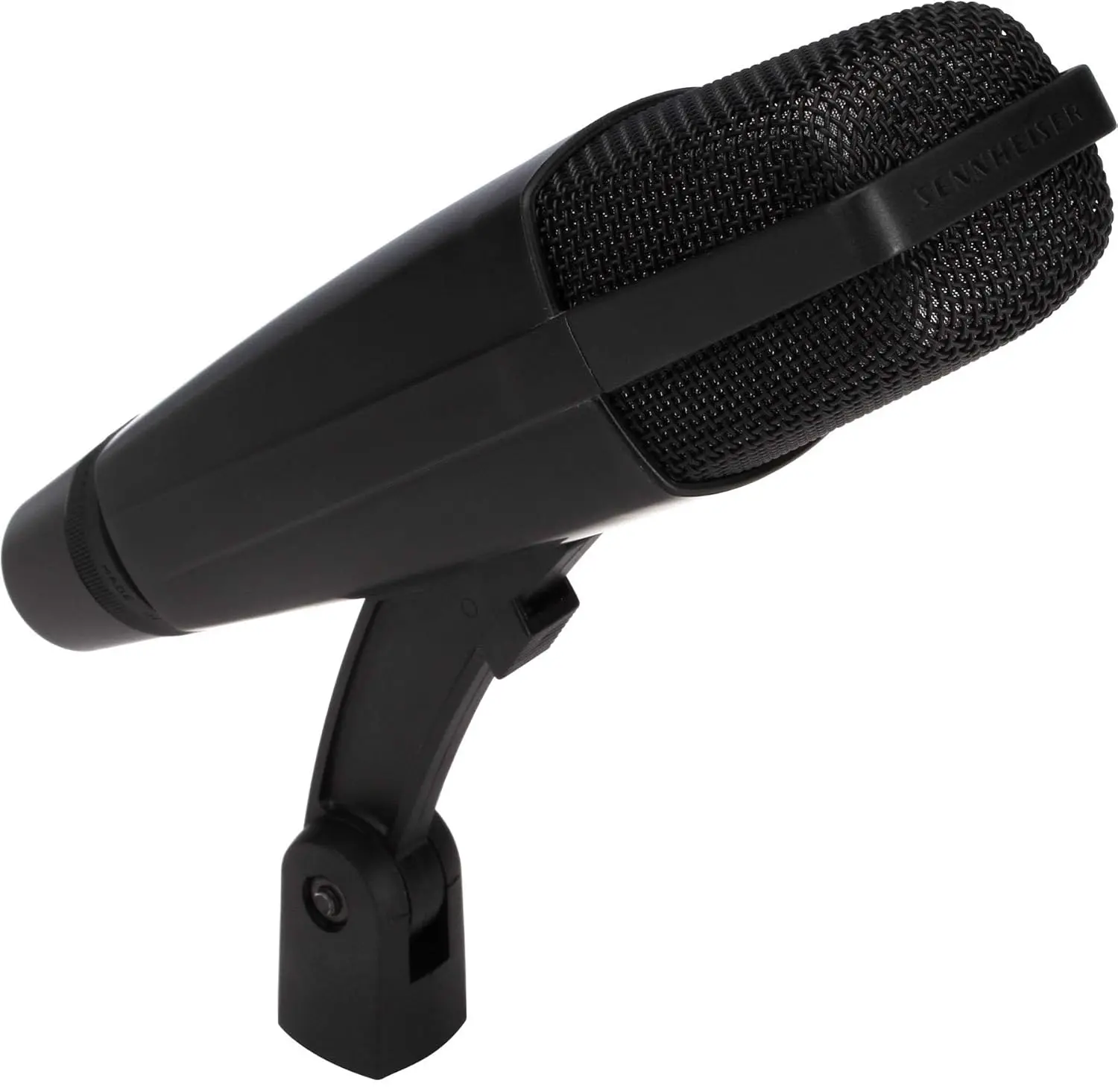
The Sennheiser MD 421 has a wider frequency response (30 Hz – 17 kHz) and handles up to 160 dB SPL. Where the SM57 focuses on attack and midrange bite, the MD 421 captures more low end and a fuller picture of the amp. It's more of a complementary tool than a replacement.

Using both mics on the same speaker is a pro recording technique: the SM57 on the grille for attack, the MD 421 next to it for body, then blended to taste. This gives you more flexibility in the mix than a single mic.

The MD 421 costs around $379, nearly four times the price of the SM57. If you record amps often and want more tonal options, it's a worthwhile investment. To start, the SM57 is more than enough.

Sennheiser MD 421Shure SM57

Shure SM7B on Guitar Amps: It Works But It's Not Ideal

The SM7B is known as a vocal mic, but it also gets used on guitar amps. Its frequency response is flatter than the SM57's, with less midrange emphasis. For blues, jazz, or classic rock, it can sound more natural and less processed. It also has excellent off-axis rejection, which helps in untreated rooms.

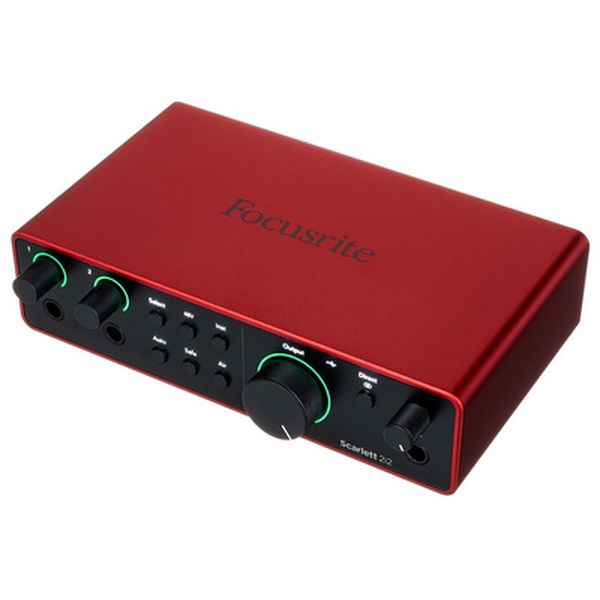
The main issue is its low output. The SM7B needs a lot of clean gain, and most interfaces can't deliver it without adding noise. For amp use, a Cloudlifter CL-1 or equivalent is practically essential. If you already own an SM7B, give it a try. If you're buying a mic specifically for guitar amps, the SM57 performs better for less money.

Shure SM7BFocusrite Scarlett 2i2 4th Gen

How to Position the Mic on the Cabinet

The position of the mic on the cabinet affects the tone more than the choice of mic itself. The same SM57 can sound completely different depending on where you place it. Here are the basic parameters:

Center vs edge: The center of the cone gives the brightest, most aggressive sound. Maximum attack and presence. This is the position for rock and metal. The edge of the cone (where it meets the rubber surround) gives a darker, rounder sound with less top end. Most classic rock tones fall somewhere between center and edge.

Angle: Pointing the mic straight at the speaker (on-axis) gives the most direct sound. Angling it 30-45 degrees (off-axis) tames harsh high frequencies. It's a good starting point if the tone sounds too bright.

Distance: With the mic touching the grille, you get maximum impact and minimal room sound. Pulling it back 2-6 inches introduces the natural phase cancellation between the speaker and the mic, which can sound good on certain amps. It's worth trying different distances.

The recommended approach: record the same riff in different positions and listen to what works best in the context of the song. Twenty minutes of testing can save hours of EQ later.

Shure SM57Sennheiser MD 421Shure SM7B
Verdict Shure SM57 ($99) is the best choice for most amp recordings. Buy it first.

Frequently Asked Questions

What Products Are in This Guide?

Shure SM57

Shure SM57

★★★★½ 45,210
$99 USD
The most recorded instrument microphone in history. Indestructible, affordable, and incredible on guitar cabs, snares, and horns. Every musician should own one.
Shure SM7B

Shure SM7B

★★★★½ 18,453
$399 USD
The industry-standard dynamic microphone for broadcast, podcasting, and vocal recording. Warm, smooth sound with excellent rejection.
Sennheiser MD 421

Sennheiser MD 421

★★★★½ 8,765
$399 USD
The tom-tom king and guitar cab legend. Five-position bass roll-off switch, handles SPLs up to 160dB. The industry standard dynamic for instruments since 1960.
Focusrite Scarlett 2i2 4th Gen

Focusrite Scarlett 2i2 4th Gen

★★★★½ 34,567
$199 USD
The world's best-selling audio interface just got better. 120dB dynamic range, Air mode, and Loopback for streaming. Studio-grade conversion.
SoundBetter Fiverr
Cuban Tres, Bass & Guitar - played and recorded with my personal gear