Cuban Tres, Bass & Guitar - played and recorded with my personal gear
SoundBetter
Find the Best Deals Across Top Music Stores
Guides My Setup About Me

Best Studio Monitors for Small Rooms & Home Studios (2026)

Best Studio Monitors for Small Rooms & Home Studios (2026)

Small rooms present unique challenges — bass build-up, early reflections, and limited listening position options. After years of mixing in tiny apartments, hotel rooms, and cramped home studios, I know which monitors work in tight spaces and which ones just make problems worse. These four pairs are specifically chosen for small room performance.

How to Choose the Best Studio Monitors

Studio monitors are the most important tool for getting accurate mixes. Unlike consumer speakers that flatter your music, monitors reveal the truth — every flaw, every frequency imbalance, every mix problem. Choosing the right pair for your room and budget is critical.

Room size determines speaker size. A common mistake is buying monitors that are too large for the room. In a small room (under 150 sq ft), 5-inch monitors are ideal. Medium rooms (150-300 sq ft) work well with 6-7 inch monitors. Large rooms can handle 8-inch monitors and above.

Front-ported vs rear-ported matters in small spaces. Monitors with front-firing bass ports can be placed closer to walls without bass buildup. Rear-ported monitors need at least 6-12 inches of clearance behind them to avoid boomy, inaccurate bass. In small rooms, front-ported designs are much more forgiving.

Active vs passive: Nearly all studio monitors are active (built-in amplifiers). The advantage is that the amplifier is matched specifically to the drivers. Some high-end monitors use separate external amplifiers, but for most home studios, active monitors are the right choice.

Room correction is a game-changer. Monitors with built-in DSP and room EQ let you tune your monitors to your room using a smartphone app. This is incredibly useful for home studios where acoustic treatment is minimal. If your monitors don't have DSP, software solutions like Sonarworks Reference are excellent alternatives.


Best Budget Nearfield: JBL 305P MkII

The JBL 305P MkII is the best monitor under $200 for small rooms. The 5-inch woofer and Image Control Waveguide deliver a wide, precise stereo image even when you're sitting close — perfect for cramped desk setups. The low-frequency trim (-3dB, 0dB, +3dB) helps you compensate for room-induced bass buildup. At $149 each, they're the most affordable way to get JBL's professional monitoring into a small space. The balanced, slightly relaxed top end means less ear fatigue during long sessions.

Best Bang for Buck: Kali Audio LP-6 V2

The Kali Audio LP-6 V2 is engineered specifically for challenging room environments. The 3D Imaging Waveguide creates a wider sweet spot than almost any monitor in its class — you don't have to sit perfectly still to get an accurate stereo image. The LF and HF trims offer extensive room compensation. The bass response is surprisingly deep and controlled for a 6.5-inch woofer. At $199 each, the LP-6 V2 outperforms monitors costing twice as much, especially in imperfect rooms.

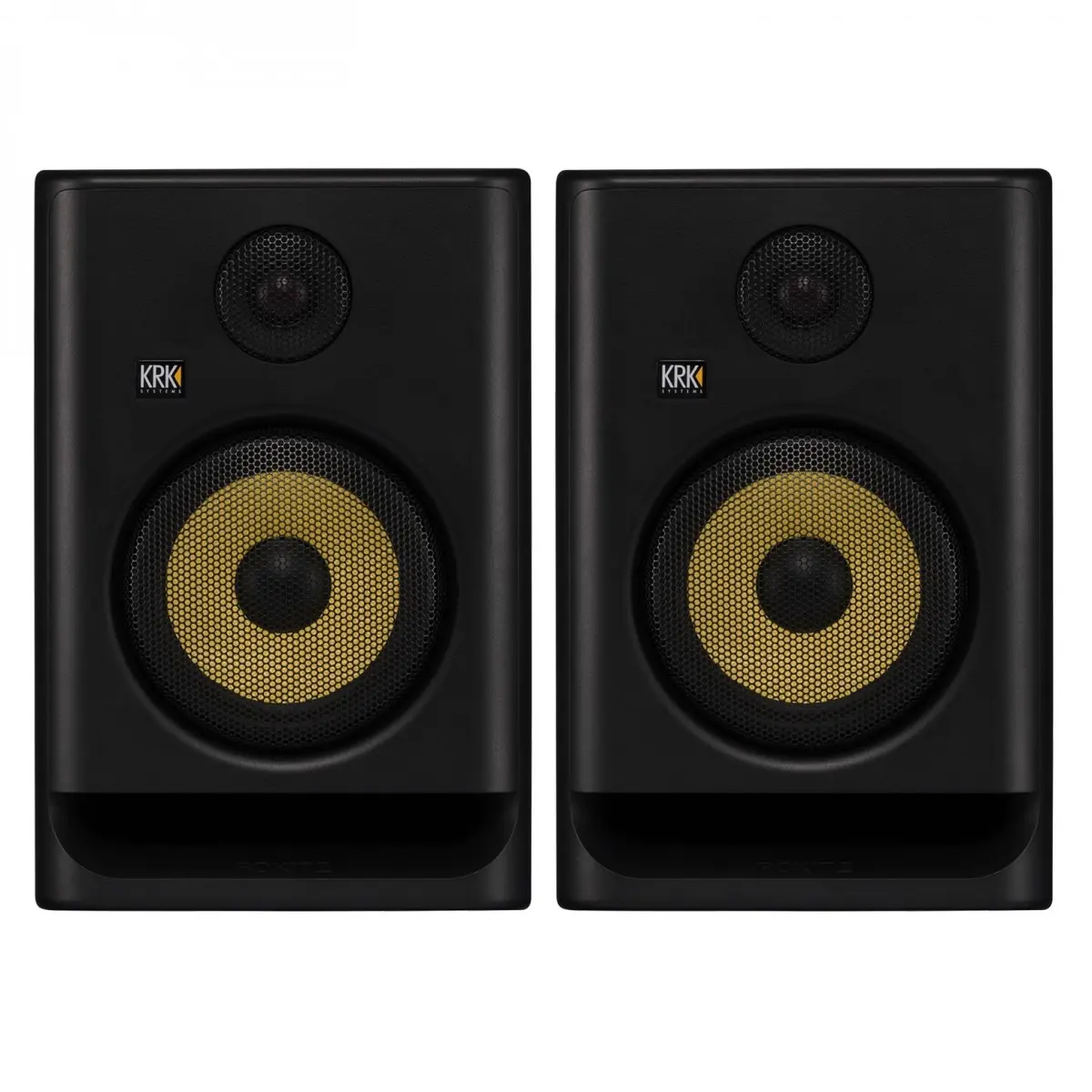
Best DSP-Equipped: KRK Rokit 7 G5

The KRK Rokit 7 G5 is the best-selling monitor for home studios for good reason — the built-in DSP EQ lets you tune your monitors to your specific room. 25 different EQ settings (4-band parametric with graphic presets) mean you can dial out problem frequencies without external treatment. The 7-inch woofer delivers more low-end extension than 5-inch or 6.5-inch alternatives. The Kevlar driver resists breakup at high SPL. At $249 each, the onboard DSP makes these the most adaptable monitors for challenging small rooms.

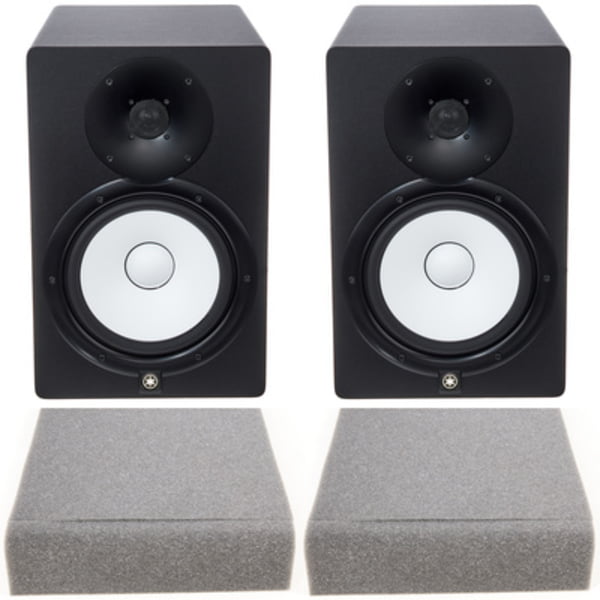
Industry Standard: Yamaha HS8

The Yamaha HS8 is the brutally honest industry standard that reveals every flaw in your mix. The 8-inch cone woofer delivers tight, accurate bass that translates perfectly to other systems — what you hear is what you get. The white cone and twisted-pair bass reflex port are iconic for good reason: these monitors don't flatter, they tell the truth. For small rooms, the HS8's front porting (vs. rear porting on many competitors) means you can place them closer to walls without muddy bass. The Room Control and High Trim switches give you basic room compensation. At $349 each, they're the reference standard for a reason.
Verdict JBL 305P for tight budgets, Kali LP-6 V2 for best value, KRK Rokit 7 G5 for DSP

Products in this Guide

JBL 305P MkII

JBL 305P MkII

★★★★½ 12,340
$149 USD
The legendary budget monitor with JBL's Image Control Waveguide for a massive sweet spot and stunning stereo imaging. 5-inch woofer with patented Slip Stream port delivers tight, accurate bass in any room.
Kali Audio LP-6 V2

Kali Audio LP-6 V2

★★★★½ 3,890
$199 USD
The best value studio monitor with boundary EQ compensation for perfect sound in any room. 6.5-inch woofer with large voice coil delivers exceptional bass extension and clarity.
KRK Rokit 7 G5

KRK Rokit 7 G5

★★★★½ 18,907
$498 USD
Professional bi-amped studio monitors with Kevlar drivers, DSP-driven EQ, and a front-firing bass port. G5 features 32-bit processing and enhanced room correction.
Yamaha HS8

Yamaha HS8

★★★★½ 12,345
$698 USD
The industry standard for mixing. 8-inch cone woofer with Kevlar coating, 1-inch dome tweeter, and room control for accurate monitoring.

Final Thoughts

For very small rooms, the JBL 305P MkII or Kali LP-6 V2 are your best bets — their waveguides and small woofers minimize room interaction. If you have moderate space and need room correction, the KRK Rokit 7 G5's DSP is invaluable. For a true reference that forces you to mix better, the Yamaha HS8 is the long-term investment that professional engineers trust. All four are excellent choices for small rooms — the key is matching the monitor to your specific space and budget.

Join us on Telegram — daily sales & deals on music gear Únete a Telegram — ofertas diarias en equipo musical