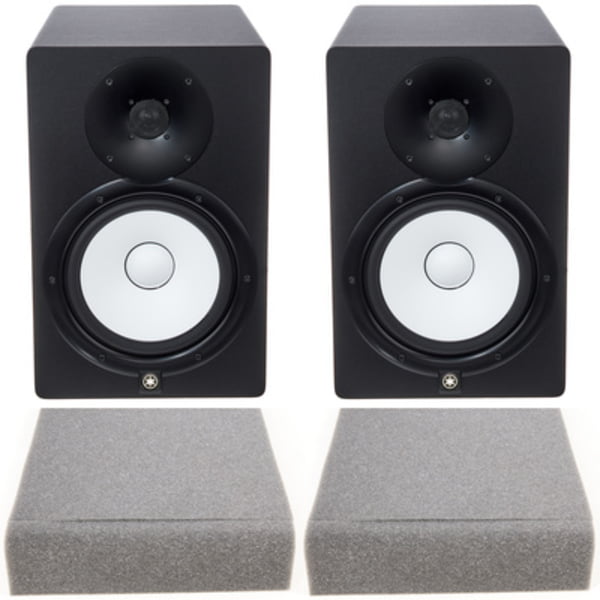
Studio monitors are the most important tool for getting accurate mixes. Unlike consumer speakers that flatter your music, monitors reveal the truth — every flaw, every frequency imbalance, every mix problem. Choosing the right pair for your room and budget is critical.
Room size determines speaker size. A common mistake is buying monitors that are too large for the room. In a small room (under 150 sq ft), 5-inch monitors are ideal. Medium rooms (150-300 sq ft) work well with 6-7 inch monitors. Large rooms can handle 8-inch monitors and above.
Front-ported vs rear-ported matters in small spaces. Monitors with front-firing bass ports can be placed closer to walls without bass buildup. Rear-ported monitors need at least 6-12 inches of clearance behind them to avoid boomy, inaccurate bass. In small rooms, front-ported designs are much more forgiving.
Active vs passive: Nearly all studio monitors are active (built-in amplifiers). The advantage is that the amplifier is matched specifically to the drivers. Some high-end monitors use separate external amplifiers, but for most home studios, active monitors are the right choice.
Room correction is a game-changer. Monitors with built-in DSP and room EQ let you tune your monitors to your room using a smartphone app. This is incredibly useful for home studios where acoustic treatment is minimal. If your monitors don't have DSP, software solutions like Sonarworks Reference are excellent alternatives.