


 Gear4Music
 Andertons
 Music Store
 zZounds
 Plugin Boutique
If you run a band and need both guitarists or a singer plus a bass player on ears now, the Sennheiser ew IEM G4-TWIN-E wins. It ships as a full twin set — one half-rack SR IEM G4 stereo transmitter, two EK IEM G4 bodypack receivers and two pairs of IE 4 earphones — so two performers are monitored the same night you unbox it. The Shure PSM300 is the smarter starter pick: a single-performer system with clean 24-bit audio, a bulletproof analog RF link out to 300 ft and the easiest one-touch scan-and-sync on the market, and you buy extra P3R receivers or a Twinpack when the band grows. The Sennheiser is the two-at-once pro set; the Shure is the affordable system that grows with you.
Sennheiser ew IEM G4-TWIN-E vs Shure PSM300: Best Wireless In-Ear Monitor System
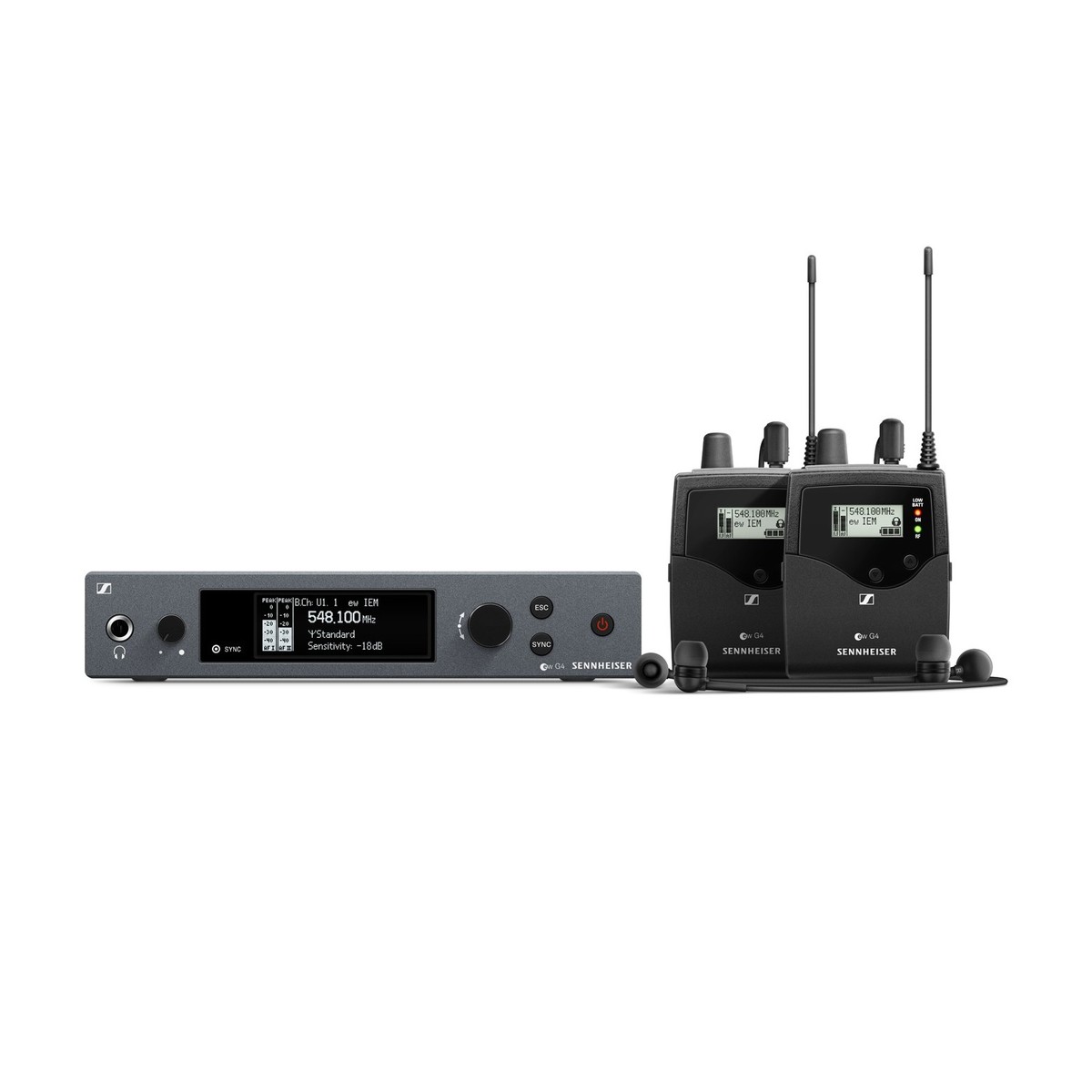
The Sennheiser ew IEM G4-TWIN-E and the Shure PSM300 are the two wireless in-ear monitor systems that come up most when a band ditches floor wedges and moves to bodypack receivers. One is a twin set built for two performers straight out of the box, the other a single-channel system you scale up by adding packs, and both deliver the thing every musician actually cares about: a personal mix that stays clear no matter where you move on stage. I have used both at live shows and rehearsals to find out which one earns its price.
Verdict
The Sennheiser ew IEM G4-TWIN-E is the pick for two performers who need monitoring out of the box — dual receivers, no extra purchases. The Shure PSM300 is the affordable single-channel system that scales as your band grows.
Sennheiser ew IEM G4-TWIN-E
Pros
- Full twin set: two EK IEM G4 bodypacks and two IE 4 earphones out of the box
- 42 MHz of tuning bandwidth with 1680 frequencies and up to 16 compatible channels
- Up to 50 mW RF output for a 100 m (300 ft) range
- Two XLR-3/4" combo inputs feed both monitor channels
- >90 dB SNR with HDX compander and WSM software support
Cons
- buys two full channels even if you only need one tonight
- Heavier and bulkier than the PSM300 transmitter and packs
- Setup and deep settings need the WSM software or front-panel menus
- No MixMode-style personal balance — each receiver gets the same stereo feed
- More expensive per additional performer than adding P3R packs
Shure PSM300
Pros
- undercuts the Sennheiser for a single performer
- One-touch scan and IR sync make setup the easiest in the class
- Proven analog RF link rated at 300 ft (90 m)
- MixMode personal mix or true stereo from two channels
- Twinpack Pro scales to two performers with SE215 earphones
Cons
- Single-channel transmitter — one performer per P3T until you buy more
- 38 Hz-15 kHz top end is narrower than the Sennheiser's reach
- No channel-dense multi-system coordination beyond basic frequency groups
- Volume and mix balance only — no parametric tweaks on the bodypack
- P3R plastic bodypack is less rugged than the metal P3RA
How Do They Compare?
| Sennheiser ew IEM G4-TWIN-E | Shure PSM300 | |
|---|---|---|
| Type | Stereo twin wireless IEM set | Single-channel wireless IEM system |
| Best For | Two performers monitored out of the box | Starting with one performer and scaling |
| Included Bodypacks | 2x EK IEM G4 | 1x P3RA (P3TRA215CL) |
| Tuning Bandwidth | 42 MHz (1680 frequencies) | 24 MHz (566–590 MHz J13 band) |
| Frequency Range | 823–865 MHz (band E) | 566–590 MHz (J13 band) |
| Compatible Channels | Up to 16 | Up to 15 |
| Wireless Range | Up to 100 m (300 ft) | Up to 90 m (300 ft) |
| RF Output Power | Up to 50 mW | Up to 10 mW |
| Audio Companding | HDX compander | Audio Reference Companding |
| Personal Mix | Same stereo feed to both packs | MixMode blend or true stereo |
The Quick Answer: ew IEM G4-TWIN-E vs PSM300
Why the ew IEM G4-TWIN-E Is the Two-Performer Pro Set
The G4-TWIN-E is built around the twin set: one transmitter, two receivers, two performers. The SR IEM G4 half-rack transmitter drives two EK IEM G4 bodypacks at once over 42 MHz of tuning bandwidth with 1680 selectable frequencies and up to 16 compatible channels, so even in dense RF environments you can find clean space. The RF output goes up to 50 mW for a range up to 100 m (300 ft), the two XLR-3/4" combo inputs let a monitor desk feed both channels, and the >90 dB signal-to-noise ratio with HDX compander keeps the audio clean and artifact-free. Both bodypacks get IR sync for fast pairing, and the system works with Sennheiser's WSM software for coordinated frequency planning. The price is the trade-off: you pay for two full receiver channels out of the box even if you only need one tonight.
Why the PSM300 Is the Easy System That Grows With You
The PSM300 makes wireless monitoring simple from the first setup. One-touch scan finds a clean channel and IR sync links the bodypack in seconds, and Audio Reference Companding delivers clean 24-bit audio with >90 dB signal-to-noise, <0.5% THD and a 38 Hz-15 kHz response across a solid analog RF link rated at 300 ft (90 m). The J13 band covers 566–590 MHz (24 MHz of tuning bandwidth) with up to 15 compatible channels per band, so you have room to grow. MixMode lets the performer blend two channels into a personal mix or flip to true stereo, and the P3RA bodypack's metal construction survives life on a guitar strap or belt. the single P3TRA215CL set covers one performer; a second P3R bodypack adds another, and the PSM300 Twinpack Pro gets two full performers with SE215 earphones included. The limits are real — single-channel transmitter, 38 Hz-15 kHz top end, and no headphone output tweaks beyond volume and mix balance — but for most club-level bands that is everything they need.
How to Choose the Right RF Band (A, E, G, J13...)
No wireless IEM system covers every UHF band at once. The UHF spectrum is regulated country by country, so Sennheiser and Shure sell each system in a fixed band: the ew IEM G4-TWIN-E you see here tunes 823–865 MHz (band E), the TWIN-A tunes 516–558 MHz (band A), and the G variant covers 566–608 MHz. The Shure PSM300 comes in bands like J13 (566–590 MHz), G20 (488–512 MHz) or H20 (518–542 MHz). The right one is whichever is legal and free in your region — not the one with the widest range.
If you tour across countries, the pro tier solves this differently. The Shure PSM1000 family spans 470–952 MHz depending on the variant, and the Sennheiser Digital 6000 receiver (EK 6042) tunes a single 470–714 MHz range with 88 MHz of switching bandwidth — both can adapt to different regions, but you pay several thousand dollars for that flexibility. For a club-level band playing mostly at home, a fixed band like the TWIN-E or PSM300 J13 is plenty: check your local wireless coordinator or the Sennheiser/Shure frequency sheets for what's free, and pick the model that matches.
The Verdict: Twin Set or Grow-With-You System?
The deciding question is how many performers need ears tonight. If two of you go wireless now, the Sennheiser ew IEM G4-TWIN-E is the cleaner buy: a full stereo twin set with 42 MHz of bandwidth, up to 16 compatible channels and two metal bodypacks out of the box. If you are monitoring one person today and may add more later, the Shure PSM300 is the better system — easier setup, proven reliability and a Twinpack option that scales to two performers for less than the Sennheiser. Buy the Sennheiser for two-up professional monitoring, buy the Shure to start one performer and grow from there.
⚠️ Attention:Prices may vary depending on your location; your final total is confirmed in your local currency at checkout. Each store applies its own shipping policy: some offer completely free shipping, others charge a shipping fee, and others provide free shipping above a minimum order amount. Additionally, some stores only ship within the U.S.
Conclusion
The Sennheiser ew IEM G4-TWIN-E wins for two performers right now: a full stereo twin set with 42 MHz of bandwidth, up to 16 compatible channels and two metal bodypacks. The Shure PSM300 wins for starting with one performer and growing: easier setup, proven reliability and a Twinpack that scales to two for less.
Want the full picture? See the best PA speakers guide, the best stage monitors, and the best stage wireless.
Frequently Asked Questions
What Products Are in This Guide?
Sennheiser ew IEM G4-TWIN-E
The Sennheiser ew IEM G4-TWIN-E is a half-rack wireless stereo monitor set: one SR IEM G4 transmitter, two EK IEM G4 bodypack receivers and two pairs of IE 4 earphones. It tunes the E band (823–865 MHz) with 42 MHz of switching bandwidth of bandwidth with 1680 selectable frequencies and up to 16 compatible channels per band, delivers up to 50 mW of RF output with a range up to 100 m (300 ft), and feeds both performers from two XLR/1/4" combo inputs with a >90 dB signal-to-noise ratio and HDX compander for clean, artifact-free monitoring.

Shure PSM300
The Shure PSM300 is a professional stereo in-ear monitor system with a single-channel P3T transmitter, P3RA metal bodypack receiver and SE215 earphones. It transmits 24-bit digital audio over a solid analog RF link up to 300 ft (90 m) with a 38 Hz-15 kHz response, >90 dB signal-to-noise ratio and <0.5% THD thanks to Audio Reference Companding, offers one-touch scan and IR sync for quick setup, and lets each performer build a personal mix with MixMode or true stereo mode.
Reviews
(0 reviews)
Cuban Tres, Bass & Guitar - played and recorded with my personal gear