


 Gear4Music
 Andertons
 Music Store
 zZounds
 Plugin Boutique
The 7 Best Wireless In-Ear Monitor Systems (2026)
Wedges eat your mix and your hearing. A wireless IEM rig gives every player a personal stereo mix at safe volumes - and thanks to 2.4 GHz systems it no longer costs four figures to cut the cables. These seven systems cover everything from a first rig to tour-grade Sennheiser.
Verdict
The PSM 300 is the overall winner for reliability per dollar; Xvive owns the budget space; Sennheiser owns the stage.
Shure PSM 300 Twin Pack Pro
Pros
- Two SE215-equipped stereo bodypacks included - a duo goes wireless in one box
- One-touch IR sync and automatic frequency scan make setup foolproof
- Built-in limiter protects ears from unexpected signal spikes
- Shure build and support backed by decades of touring trust
Cons
- Transmitter housing is plastic rather than metal
- It is real money for weekend-only bands
- Range ceiling (~300 ft) trails the flagship ULXD line
- Frequency block must be legal in your region - check before touring abroad
Sennheiser EW IEM G4
Pros
- True-diversity reception minimizes dropouts on crowded RF stages
- 1,680 tunable frequencies coordinate many systems simultaneously
- Metal half-rack transmitter integrates into professional racks
- Up to 300 ft range for large venues
Cons
- Highest price in this guide
- Stock IE 4 earbuds undersell the system's audio quality
- Analog transmission lacks encryption of newer digital platforms
- Single receiver per system - additional packs add up fast
Xvive U4
Pros
- Under- entry point democratizes wireless monitoring
- Sub-5 ms latency feels completely natural on stage
- USB-C rechargeable batteries eliminate disposable cells
- License-free 2.4 GHz works identically in any country
Cons
- Mono summing only - no stereo imaging
- 2.4 GHz spectrum fights Wi-Fi in packed venues
- 90 ft range limits large-stage roaming
- No rack-mount option for the transmitter
Sennheiser EW IEM G4-TWIN
Pros
- Two stereo receivers around one transmitter cost far less than two separate systems
- Same clean analog audio platform as the flagship EW IEM G4
- Simple IR sync gets duos rehearsing wirelessly in minutes
- Solid range for rehearsal rooms and occasional small stages
Cons
- Narrower frequency agility within its band than the single EW IEM G4
- Both players share one transmitter feed - a single mix source for the duo
- It is real money for pairs who only gig occasionally
- Stock IE 4 earbuds undersell the system - budget an upgrade
Xvive U4R4
Pros
- Four bodypacks - roughly what ONE channel of legacy UHF gear cost
- Sub-5 ms latency identical to the single Xvive U4
- USB-C charging across every unit eliminates disposable batteries
- Setup takes minutes, and spare packs stay cheap as members join
Cons
- Mono summing only for all four players
- 2.4 GHz spectrum fights Wi-Fi in packed venues
- 90 ft range limits roaming on larger stages
- One shared mix source - no individual mixes per member
Phenyx Pro PTM-10
Pros
- Genuine stereo UHF monitoring for
- Metal transmitter rack-mounts two-up with a friendlier sibling unit
- Bodypack balance, EQ and a limiter usually reserved for pricier boxes
- 89 selectable frequencies handle moderate RF congestion
Cons
- Self-noise sits above Sennheiser-tier systems
- Included earbuds are basic - plan an upgrade
- ~6 ms latency trails the sub-5 ms competition
- 160 ft range is modest for outdoor stages
Sennheiser XSW IEM
Pros
- Unlimited receivers sync to one transmitter over infrared
- IE 4 earbuds and rack-mount kit included in the box
- Band A operates on US-legal TV-band frequencies
Cons
- Official 164 ft range trails the EW IEM G4's 330 ft
- No networked remote control or Ethernet like higher Sennheiser tiers
- costs more than the PTM-10 and Xvive routes
Best Wireless IEM Systems Compared
| EW IEM G4 | PSM 300 | G4-TWIN | Xvive U4 | U4R4 | PTM-10 | XSW IEM | |
|---|---|---|---|---|---|---|---|
| Band type | UHF stereo | UHF stereo | UHF stereo x2 | 2.4 GHz mono | 2.4 GHz mono | UHF stereo | UHF stereo |
| Latency | <5 ms | <5 ms | <5 ms | <5 ms | <5 ms | ~6 ms | <5 ms |
| Range | 300 ft | 300 ft | 300 ft | 90 ft | 90 ft | 160 ft | 164 ft |
| Receivers | 1 (expandable) | 2 (Twin Pro) | 2 included | 1 (add more) | 4 included | 1 | 1 (unlimited) |
| Power | 2x AA | 2x AA | 2x AA | USB-C rechargeable | USB-C rechargeable | 2x AA | 2x AA |
| Earbuds | IE 4 included | SE215 included | 2x IE 4 | None | None | Basic pair | IE 4 included |
| Best For | Touring professionals | Working bands | Duos & rehearsals | Plug-and-play simplicity | Whole bands | Budget stereo | Expanding rigs |
How to Choose the Best Wireless IEM System?
Three decisions shape every IEM purchase. First, spectrum: UHF systems (Sennheiser, Phenyx, LD Systems) offer long range and multi-channel coordination but need licensing awareness; 2.4 GHz systems (Xvive) work license-free worldwide but share air with Wi-Fi. Second, stereo vs mono: stereo mixes let you pan your band for depth, mono systems simplify one-mix-for-all setups. Third, receivers count: solo players need one pack, bands should look at multi-pack bundles before buying singles. Latency under 5 ms feels instant; anything over 10 ms starts to pull singers off tempo.
Best Professional: Sennheiser EW IEM G4
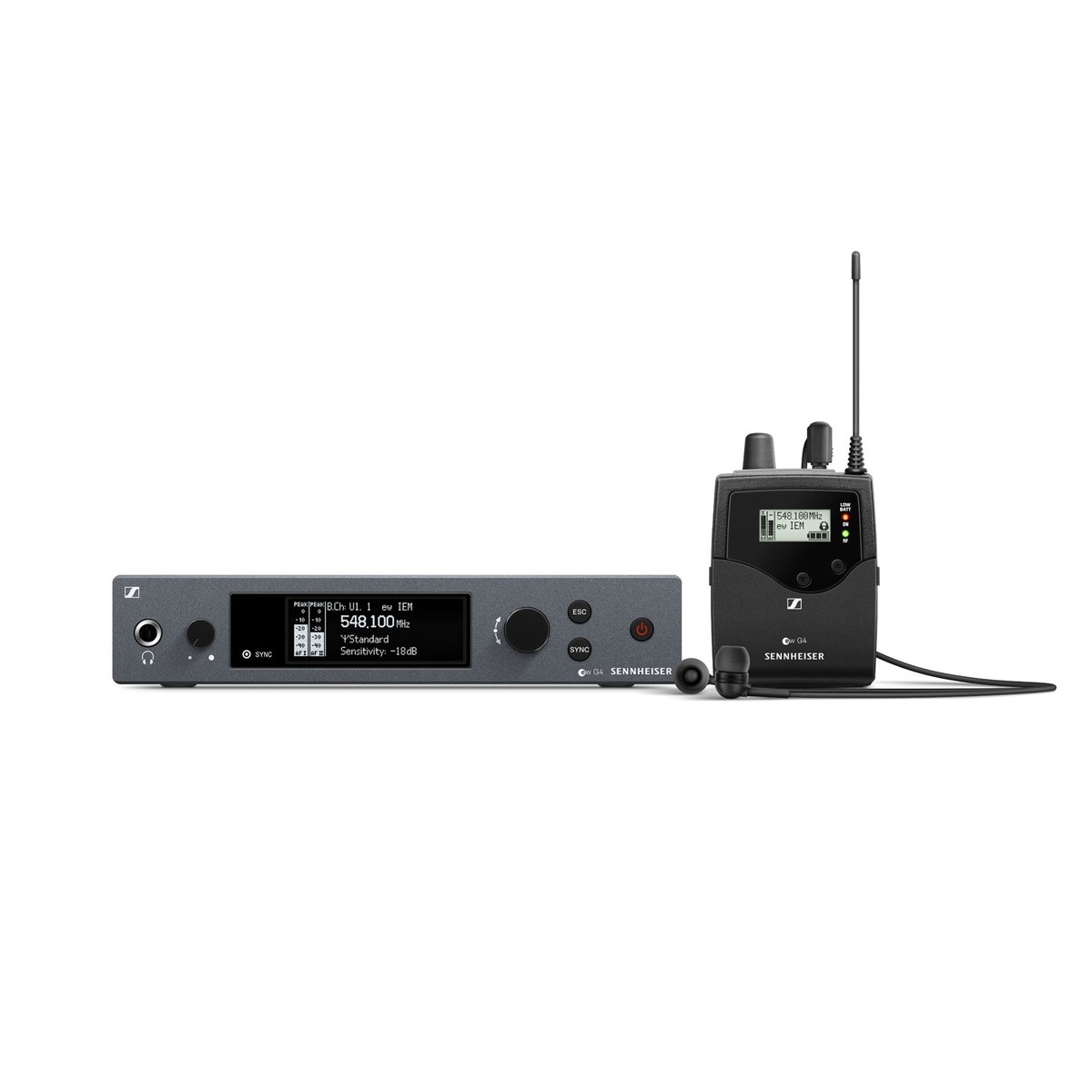
The EW IEM G4 is the touring standard for a reason. True-diversity reception kills dropouts, 1680 tunable frequencies let multiple systems coexist, and the all-metal half-rack transmitter with OLED display bolts into any touring rack. Range stretches to 300 feet line-of-sight. The included IE 4 earbuds are serviceable, but budget for custom molds or better universals to unlock what this system really delivers. If your gigs pay, this is the system your front-of-house engineer hopes you brought.
Best Band Bundle: Shure PSM 300 Twin Pack Pro
The PSM 300 remains the sweet spot between pro features and sanity pricing. One-touch sync, scan-and-set frequencies, stereo audio with limiter, and rock-solid Shure reliability make it the default first serious IEM rig. The Twin Pack Pro bundles two bodypacks with SE215 earphones, so a duo goes wireless in one purchase. Range tops out near 300 feet and the plastic transmitter is rack-friendly if not luxurious. For working bands playing clubs and theaters weekly, nothing else balances cost and confidence this well.
Best Rehearsal Duo: Sennheiser EW IEM G4-TWIN
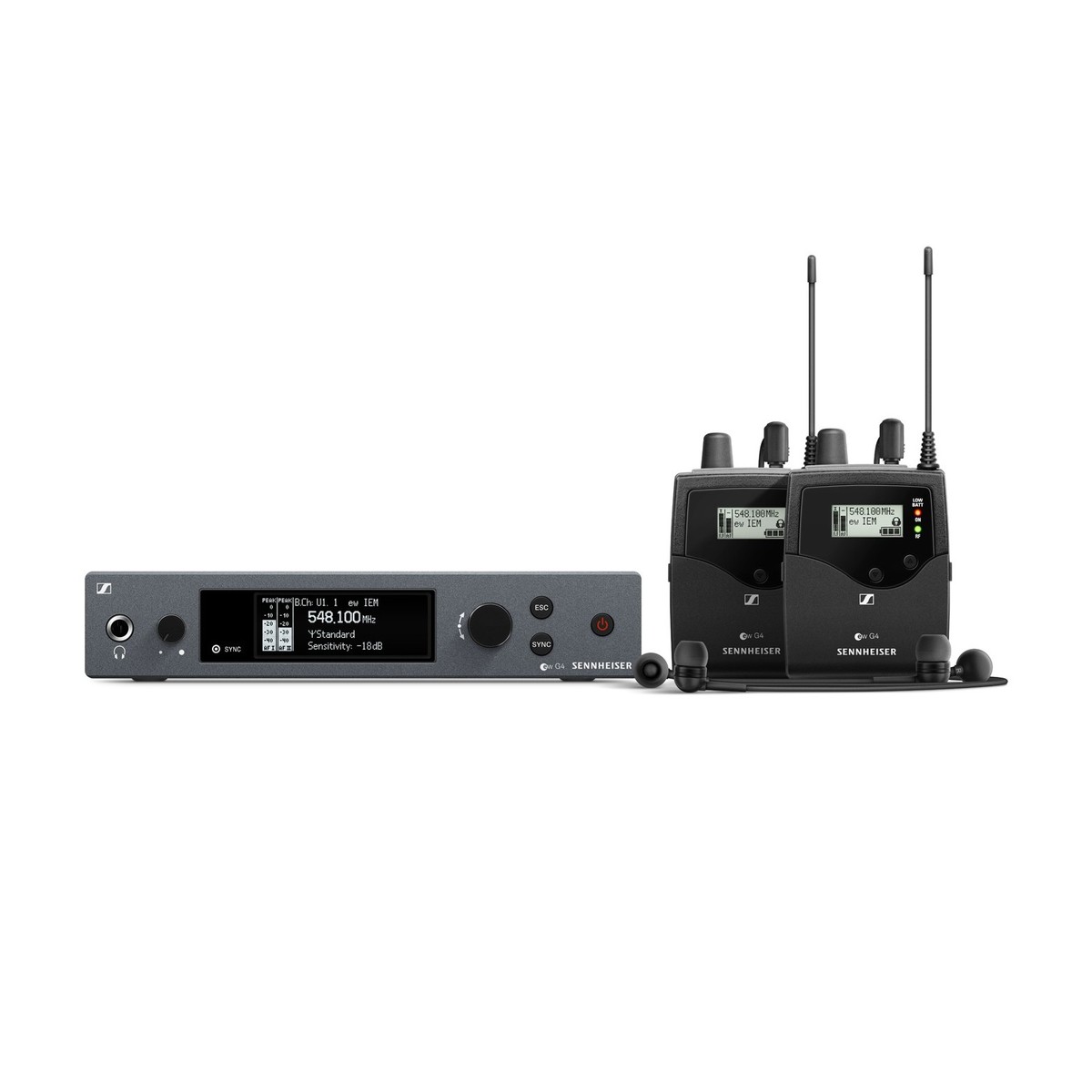
The G4-TWIN packs two stereo receivers around one transmitter, making it the tidy answer for duos and keyboard-vocal pairs who rehearse hard and gig occasionally. You get the G4 platform's clean analog audio, simple IR sync and solid range in a two-person box that undercuts buying two separate systems. Frequency agility within its band is narrower than the single G4, so very dense RF environments should still favor the full G4 or PSM 300.
Best Plug-and-Play: Xvive U4
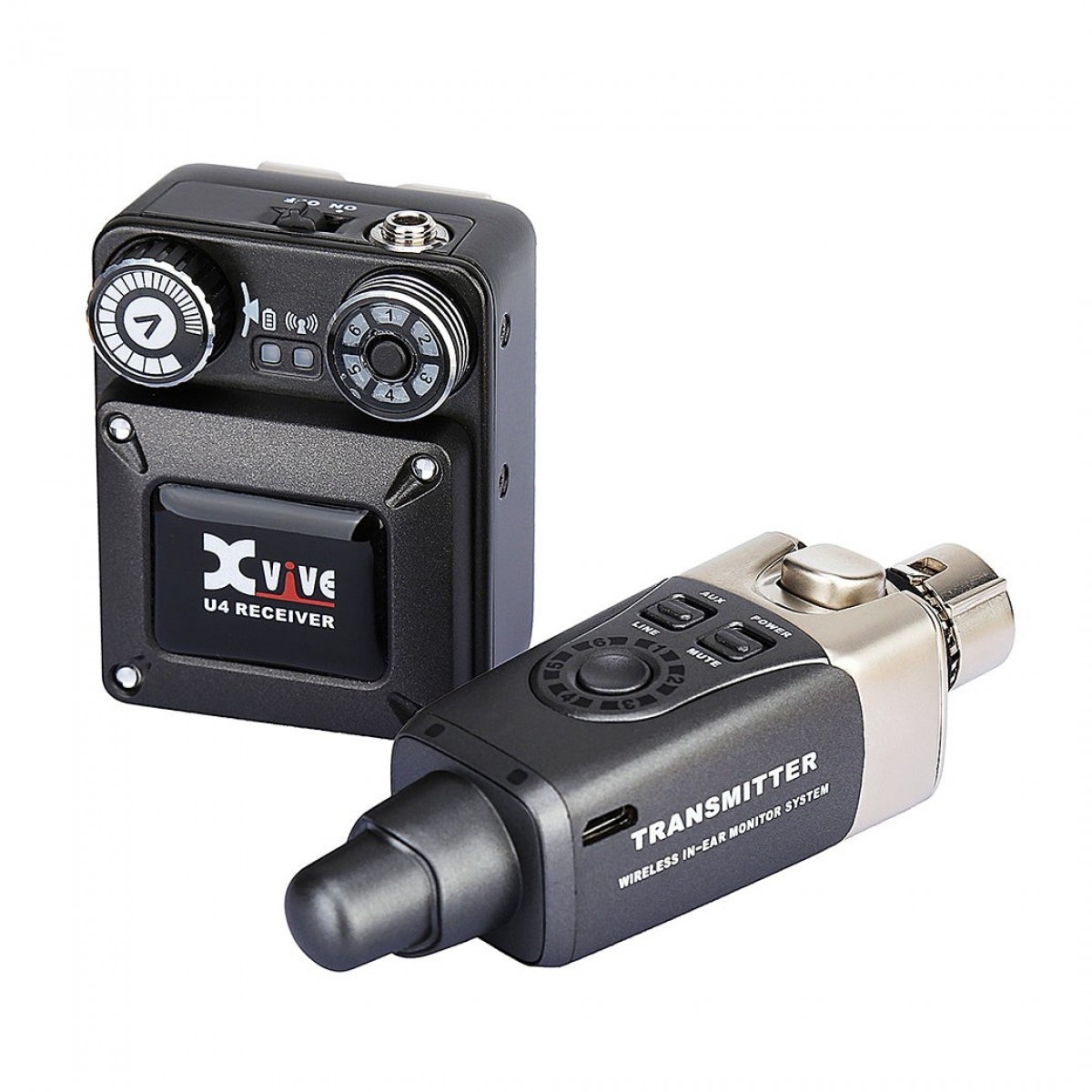
The Xvive U4 turned wireless monitoring into a impulse buy. Charge both units over USB-C, plug the transmitter into any mixer aux or headphone output, and you have sub-5 ms monitoring up to 90 feet - no frequency coordination, no rack, no license worries anywhere in the world. Six channels allow several systems side by side. Mono summing is the main compromise, and 2.4 GHz gets crowded at festival Wi-Fi levels, but for rehearsal rooms and bar stages it is transformative.
Best Whole-Band Deal: Xvive U4R4
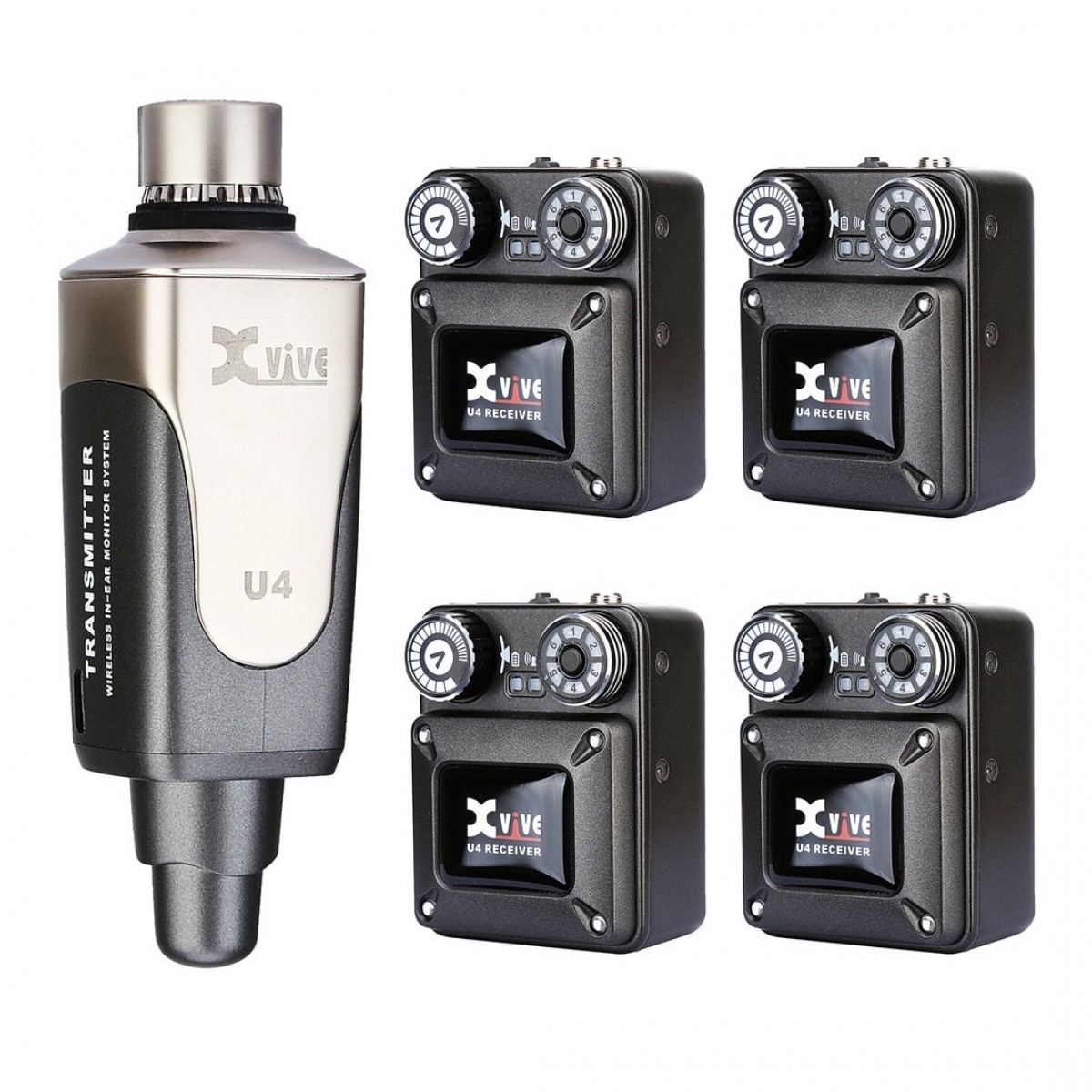
The U4R4 multiplies the U4 formula by four bodypacks - roughly what ONE channel of legacy UHF gear used to cost. Every member shares one mono mix fed from any mixer output, each charging over USB-C. Setup takes minutes and spare packs cost little if a member joins later. Drummers and vocalists who move constantly will never look back; audiophile mix depth is the trade-off you accept.
Best Budget Stereo: Phenyx Pro PTM-10
The PTM-10 brings genuine stereo UHF monitoring. The metal transmitter rack-mounts two-up, the bodypack offers balance, EQ and a limiter usually reserved for pricier boxes, and 89 selectable frequencies handle moderate RF congestion. Amazon reviewers by the hundreds confirm reliability for worship teams and weekend bands. Self-noise sits above Sennheiser-tier units and the stock earbuds are basic, but as a first stereo rig it demolishes the excuse that wireless costs too much.
Best PSM 300 Alternative: Sennheiser XSW IEM
The XSW IEM distills Sennheiser's pro wireless know-how into a starter rig. The metal half-rack transmitter takes two combo inputs, syncs unlimited bodypack receivers over infrared, and ships with a rack kit plus IE 4 earbuds in the box. Each player gets focus mode, EQ and a limiter at the belt pack, so nobody touches the desk mid-song. Crucially for US players, Band A (476-500 MHz) sits inside legal TV-band spectrum - none of the gray-market frequency worries that come with imported EU-band systems. Official range is a conservative 164 feet line of sight, half of what the EW IEM G4 claims, but rehearsal rooms and club stages rarely need more - and if you outgrow one receiver, you add another instead of replacing anything.
⚠️ Attention:Prices may vary depending on your location; your final total is confirmed in your local currency at checkout. Each store applies its own shipping policy: some offer completely free shipping, others charge a shipping fee, and others provide free shipping above a minimum order amount. Additionally, some stores only ship within the U.S.
Conclusion
Touring professionals should own the Sennheiser EW IEM G4; working bands get the best balance from the Shure PSM 300 twin pack. Duos save with the G4-TWIN. Small budgets transform overnight with the Xvive U4, whole bands with the U4R4, and stereo on a shoestring means the Phenyx PTM-10, and expanding line-check rigs grow on the Sennheiser XSW IEM.
Frequently Asked Questions
What Products Are in This Guide?
Sennheiser EW IEM G4 Stereo Wireless System
Pro-grade UHF stereo IEM with true-diversity reception, 1680 tunable frequencies and rack-mountable metal transmitter. Includes IE 4 earphones.

Shure PSM300
The Shure PSM300 is a professional stereo in-ear monitor system with a single-channel P3T transmitter, P3RA metal bodypack receiver and SE215 earphones. It transmits 24-bit digital audio over a solid analog RF link up to 300 ft (90 m) with a 38 Hz-15 kHz response, >90 dB signal-to-noise ratio and <0.5% THD thanks to Audio Reference Companding, offers one-touch scan and IR sync for quick setup, and lets each performer build a personal mix with MixMode or true stereo mode.
Sennheiser ew IEM G4-TWIN-E
The Sennheiser ew IEM G4-TWIN-E is a half-rack wireless stereo monitor set: one SR IEM G4 transmitter, two EK IEM G4 bodypack receivers and two pairs of IE 4 earphones. It tunes the E band (823–865 MHz) with 42 MHz of switching bandwidth of bandwidth with 1680 selectable frequencies and up to 16 compatible channels per band, delivers up to 50 mW of RF output with a range up to 100 m (300 ft), and feeds both performers from two XLR/1/4" combo inputs with a >90 dB signal-to-noise ratio and HDX compander for clean, artifact-free monitoring.
Xvive U4 Wireless In-Ear Monitor System
2.4 GHz digital IEM with under-5 ms latency, 90 ft range and USB-rechargeable batteries in transmitter and bodypack. The plug-and-play escape from wedge monitors.
Xvive U4R4 Wireless IEM System (4 Receivers)
The whole-band bundle: one transmitter drives four bodypack receivers so every member gets the same monitor mix without a rack of expensive wireless.
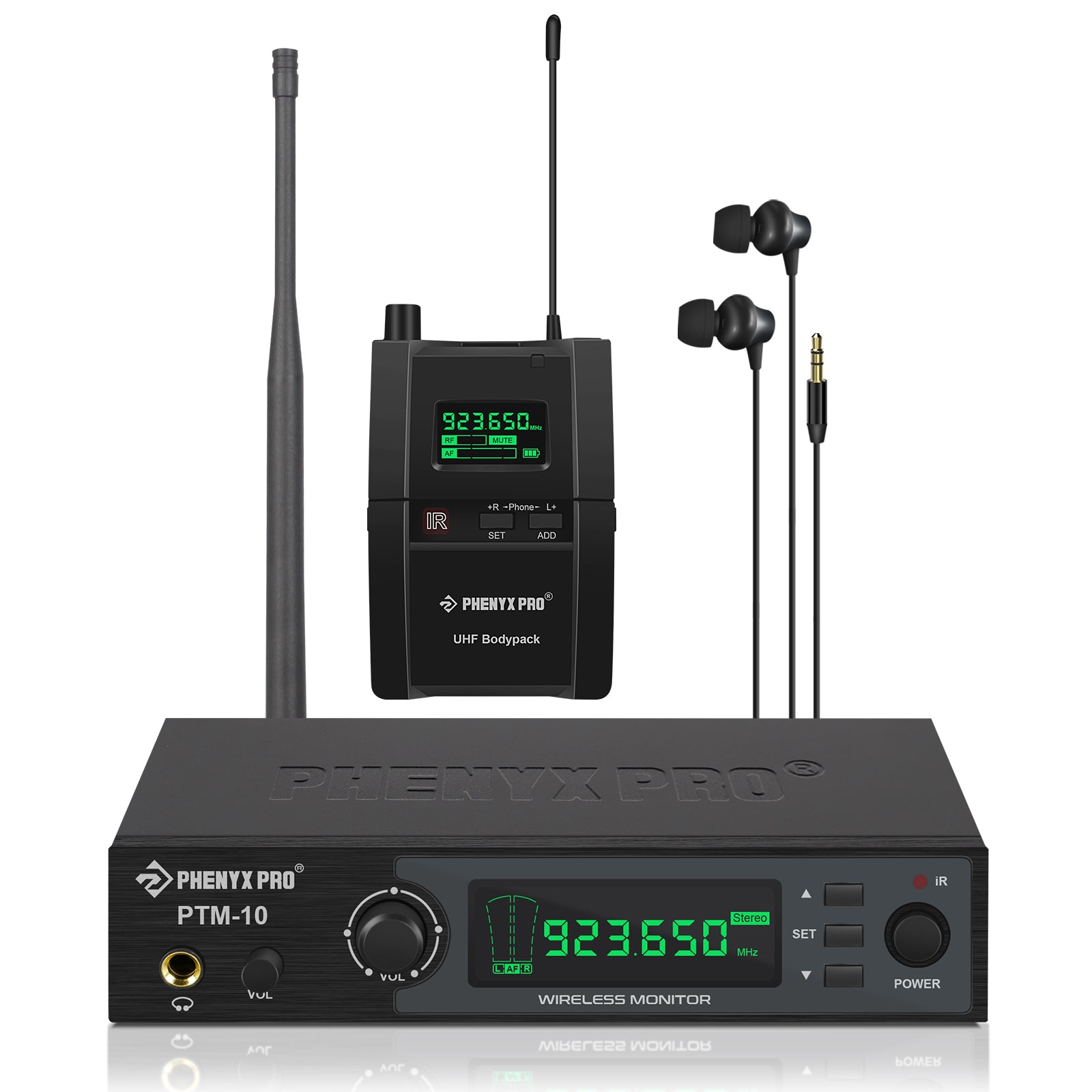
Phenyx Pro PTM-10 UHF Stereo IEM System
Budget stereo IEM with metal rack-mountable transmitter, selectable UHF frequencies, and bodypack controls for balance, EQ and limiter.
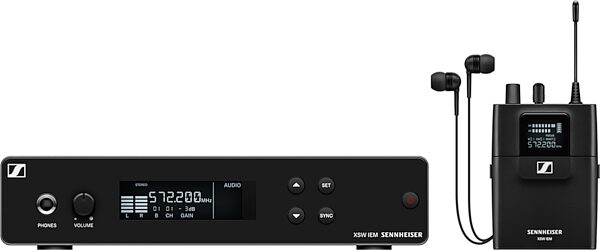
Sennheiser XSW IEM Wireless System
Sennheiser's entry UHF rig: metal half-rack transmitter, focus mode, EQ and limiter at the belt pack, unlimited IR-synced receivers, with IE 4 earbuds and a rack kit included.
Reviews
(0 reviews)
Cuban Tres, Bass & Guitar - played and recorded with my personal gear