Cuban Tres, Bass & Guitar - played and recorded with my personal gear
Guides My Setup About Me

Active vs Passive PA Speakers: Which Is Right for You?

Active vs Passive PA Speakers: Which Is Right for You?

The choice between active and passive PA speakers is one of the most important decisions you'll make for your live sound setup. Get it right, and your system will sound clear, powerful, and reliable for years.

Active vs Passive PA Speakers: What's the Difference?

Active (powered) speakers have the amplifier built directly into the speaker cabinet. You plug your mixer or audio source directly into the speaker — no external amplifier needed. Each speaker has its own dedicated amp channel, tuned specifically to its drivers. This means perfect power matching, built-in protection circuitry, and often DSP for EQ, limiting, and system tuning. Active speakers are the modern standard for portable PA systems, bands, and events.

Passive speakers require a separate external amplifier. The amplifier sends power to the speakers through speaker cables (usually NL4 SpeakOn connectors). One amplifier can power multiple passive speakers, which can be more cost-effective for large installations. Passive systems offer more flexibility for component upgrades — you can swap amps or speakers independently. They remain the standard for installed systems, theaters, and large-scale tours where amplifiers are rack-mounted and protected.

The trend is overwhelmingly toward active. Nearly every portable PA speaker released today is active. DSP technology has made active speakers smarter, lighter, and more reliable than ever. The convenience of carrying a speaker and amp in one box cannot be overstated for working musicians. For most users — bands, DJs, events, houses of worship — active speakers are the right choice.

Passive still wins for specific use cases. Large venue installations, theaters with centralized amp rooms, and touring productions with dedicated sound engineers often prefer passive. The ability to place amps in a controlled rack environment (cool, dry, protected from stage vibration) extends equipment life. High-end passive speakers with premium external amplification can outperform anything in the active world, but at significantly higher cost and complexity.
What About Amplifier Matching and Power Handling?

With active speakers, amplifier matching is done for you. The manufacturer has already selected the perfect amplifier for each driver. You don't need to calculate wattage, impedance, or RMS ratings. The DSP handles limiting and crossover points automatically. This removes the single biggest point of failure in live sound — mismatched amplifier and speaker combinations that lead to blown drivers.

With passive speakers, you must match amplifier power carefully. A general rule: choose an amplifier that delivers 1.5 to 2 times the speaker's continuous power rating (RMS). This gives you clean headroom without risking driver damage. The amplifier should be stable at the speaker's nominal impedance (usually 4 or 8 ohms). Running multiple passive speakers in parallel changes the impedance load — two 8-ohm speakers in parallel present a 4-ohm load. Incorrect matching is the most common cause of speaker failure in passive systems.

Bi-amping vs passive crossover: High-end passive speakers use passive crossovers inside the cabinet to split the signal between woofer and tweeter. Bi-amping (or tri-amping) uses separate amplifier channels for each driver, with an active crossover before the amps. Active speakers are inherently bi-amped — each driver has its own amp channel and DSP crossover, which is why they often sound clearer and more efficient than equivalently priced passive setups.

Active vs Passive: Pros and Cons at a Glance

This guide only recommends active (powered) speakers because for the vast majority of users — bands, DJs, events, houses of worship — active speakers deliver better value, convenience, and reliability. Here's a breakdown of why:

Active (Powered) SpeakersPassive Speakers
Pros
  • Built-in amplifier — no extra gear needed
  • Perfect power matching — impossible to mismatch
  • Built-in DSP with presets
  • Bi-amped by design — clearer sound
  • Portable — one box per speaker
  • Faster setup and teardown
  • Separate components — easier to repair
  • One amp can power multiple speakers
  • Amps rack-mounted in controlled environment
  • Standard for large installed systems
  • No electronics built into the speaker cabinet
Cons
  • If amp fails, whole speaker is down
  • Heavier per cabinet (amp built in)
  • Less flexible for large custom installations
  • Requires separate amplifier purchase and setup
  • Risk of mismatched amp — blown drivers
  • No built-in DSP without external processor
  • More cables, more complexity, heavier total weight
  • Slower setup and teardown

Why we don't recommend passive speakers in this guide: Passive speakers make sense for large fixed installations, theaters with centralized amp rooms, and high-end touring systems with dedicated sound engineers. For everyone else — including most musicians, DJs, event organizers, and houses of worship — active speakers are simpler, sound better for the price, and are far less likely to suffer from operator error. The cost of a comparable passive setup (speakers + amplifier + DSP + cables) quickly exceeds the price of quality active speakers, and the added complexity introduces failure points that most users don't need.

Is the Electro-Voice ZLX-12P the Best Active PA Speaker for Bands and DJs?

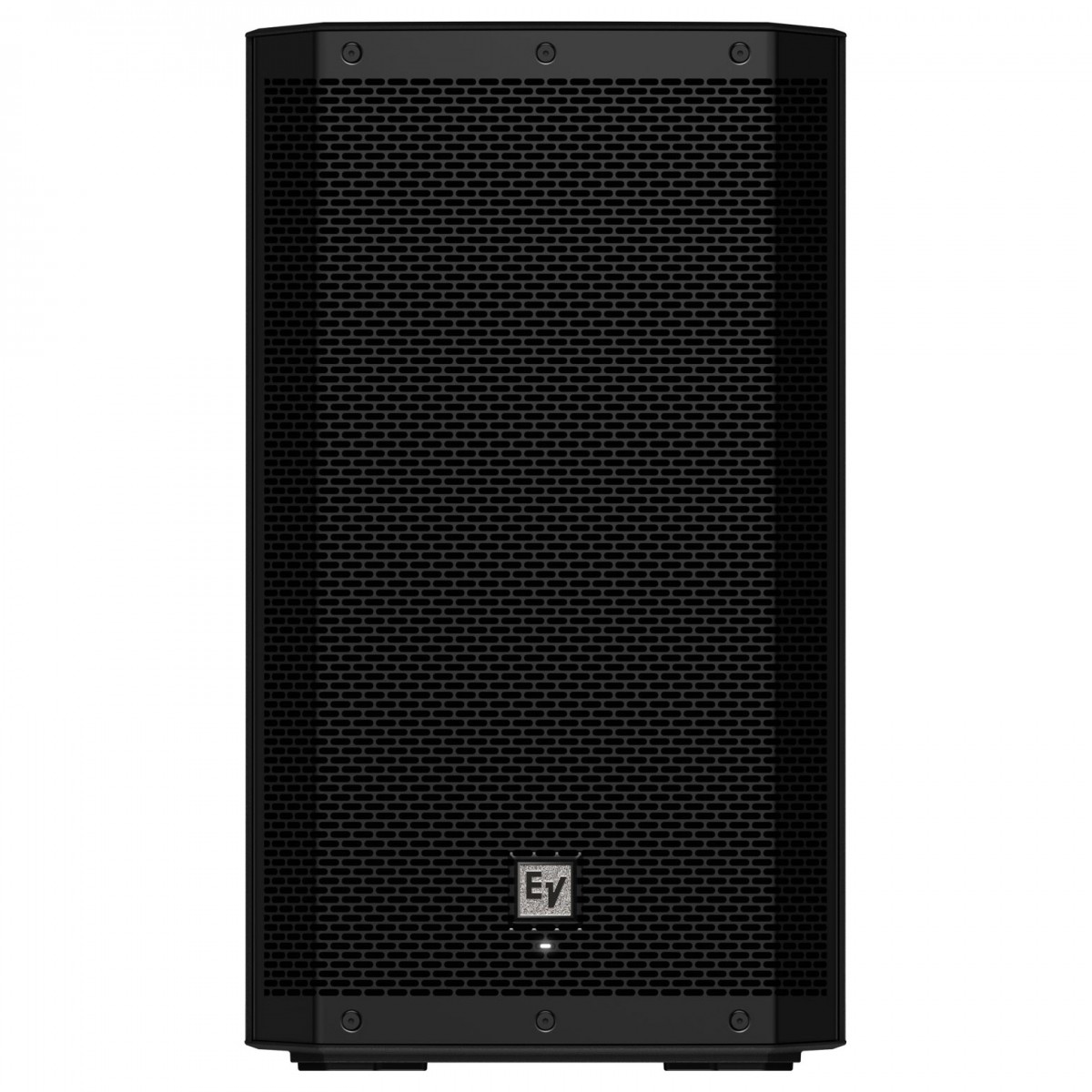
The EV ZLX-12P is the best-selling powered PA speaker for a reason. At $599, you get 1000W peak power, a 12-inch woofer with titanium tweeter, and built-in DSP with presets for music, speech, and monitor use. It weighs only 30 lbs — one person can easily carry and set up a pair. The ABS cabinet is durable enough for weekend warrior use. The built-in two-channel mixer with Bluetooth lets you connect a phone for background music or a second microphone without a separate mixer. For most bands, DJs, and events, the ZLX-12P is the smartest value in powered PA.
EV ZLX-12P Powered Speaker

Is the QSC K12.2 the Best Active PA Speaker for Professional Sound Quality?

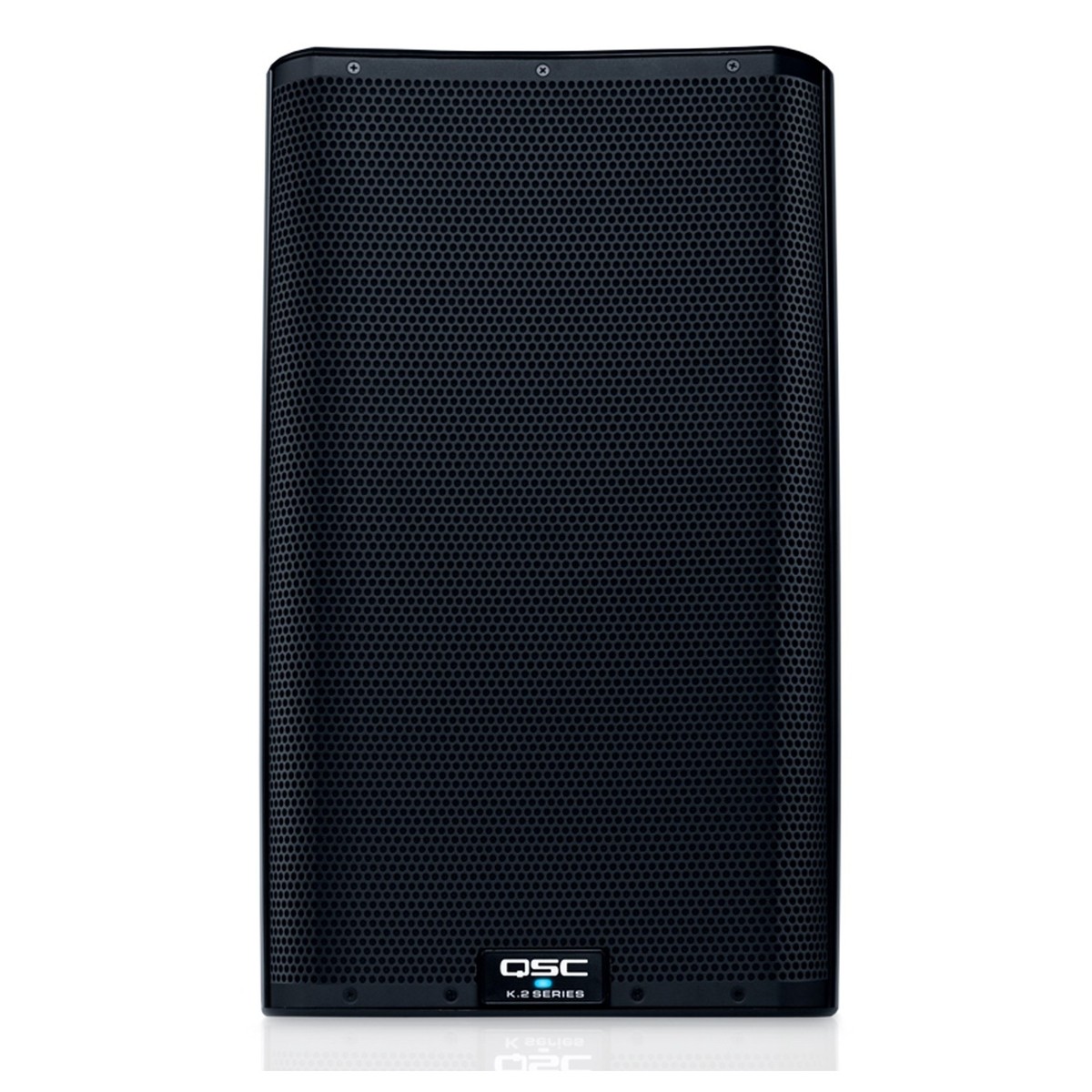
The QSC K12.2 is the industry standard for pro powered speakers. Walk into any professional sound company, and you'll find K Series speakers. 2000W peak power with Class-D amplification delivers headroom for days. The 12-inch woofer with 1.75-inch diaphragm compression driver produces clear, articulate sound at any volume. The DSP includes four system presets (Live, Music, Speech, Monitor) plus user-configurable EQ. The rugged polypropylene enclosure with rubberized corners survives years of touring abuse. At $999, the K12.2 is the benchmark that all other active PA speakers are measured against.
QSC K12.2 Powered Speaker

Is the Yamaha DBR12 the Best Budget Active PA Speaker?

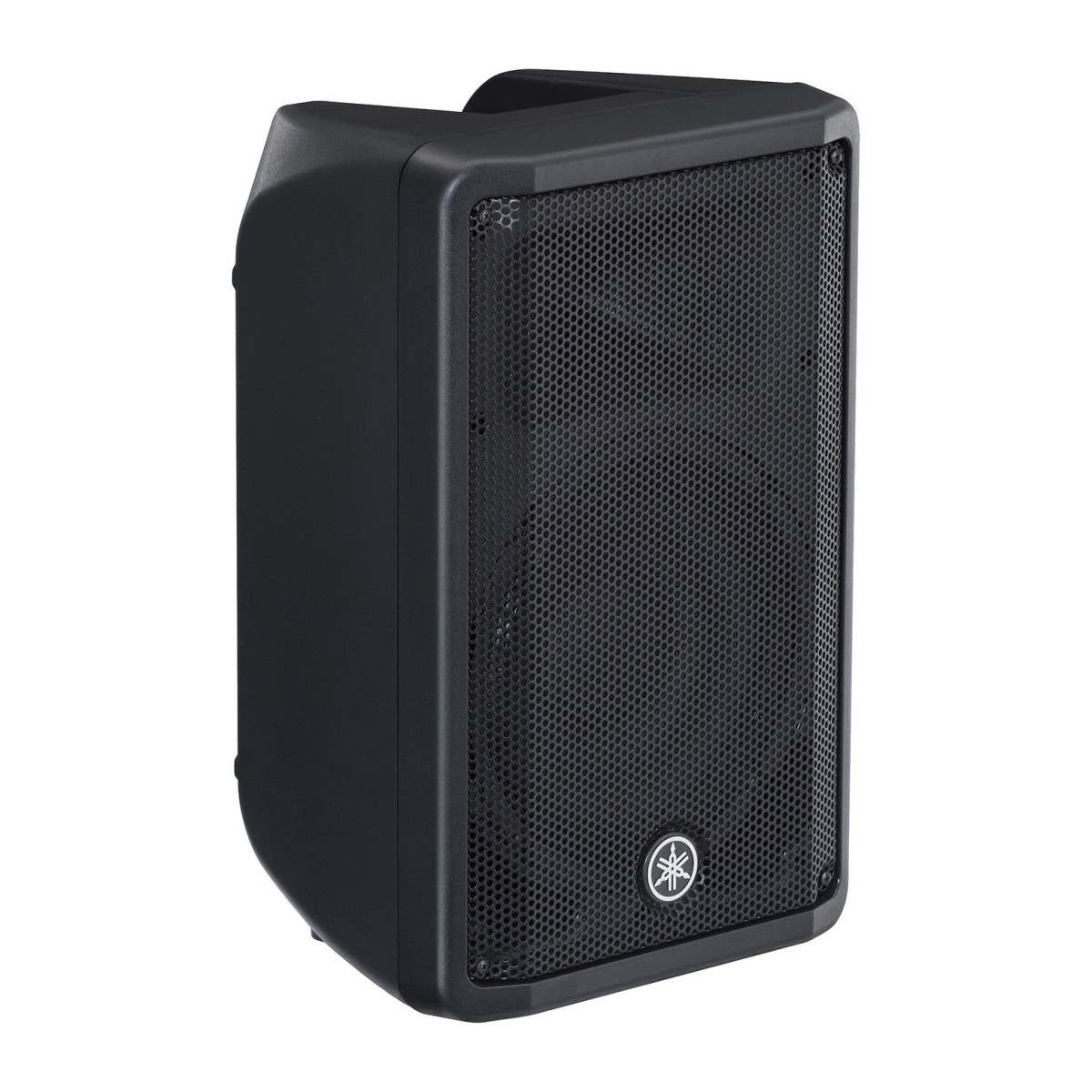
The Yamaha DBR12 delivers pro features at an entry-level price. At just $459, you get 1000W peak power with Yamaha's legendary FIR-X tuning and D-CONTOUR DSP for automatic sound shaping based on volume level. The 12-inch woofer and 1.4-inch compression driver deliver 131dB SPL — loud enough for medium venues and outdoor events. The lightweight design (34 lbs) and ergonomic handles make transport easy. Yamaha's 7-year warranty is the best in the industry. For budget-conscious buyers who refuse to compromise on sound quality, the DBR12 is the clear winner.
Yamaha DBR12
Verdict Active speakers win for nearly everyone — we recommend three proven options
Electro-Voice ZLX-12P
Pros
  • Best value at $599
  • Lightweight design
  • QuickSmart DSP for easy setup
  • Clear and balanced sound
  • Proven reliability
Cons
  • Lower max SPL than QSC
  • No Bluetooth
  • Limited low-end extension
  • Basic DSP presets only
QSC K12.2
Pros
  • Industry standard for professional sound
  • Highest max SPL (131 dB)
  • Deep bass extension from 12" woofer
  • Advanced DSP with multiple modes
  • Excellent build quality
Cons
  • Expensive at $999
  • Heavier than competitors
  • No 3rd product for comparison in passive
Yamaha DBR12
Pros
  • Best budget option at $499
  • Class-D amplification is efficient
  • Lightweight and portable
  • Clean output up to 129 dB SPL
  • Yamaha reliability
Cons
  • Fewer DSP features than QSC
  • Less low-end punch than competition
  • Basic EQ controls
  • No networking capability

Frequently Asked Questions

What Products Are in This Guide?

EV ZLX-12P Powered Speaker

EV ZLX-12P Powered Speaker

★★★★½ 8,900
$599 USD
Professional powered PA speaker. 1000W peak power, 12-inch woofer with titanium tweeter. Lightweight design at just 30 lbs. Built-in DSP with presets for any application.
QSC K12.2 Powered Speaker

QSC K12.2 Powered Speaker

★★★★½ 12,340
$999 USD
The industry standard for live sound reinforcement. 2000W peak power, 12-inch woofer. Deep bass extension, pristine highs. Rugged build, road-ready design. The choice of professionals worldwide.
Yamaha DBR12

Yamaha DBR12

★★★★½ 12,300
$459 USD
The #1 rated budget PA speaker for live sound. 1000W peak power with 12-inch woofer and 1.4-inch compression driver delivering 131dB SPL. Yamaha FIR-X tuning for linear phase response. D-CONTOUR DSP for optimized sound in any setting. Use as main PA or floor monitor. Legendary Yamaha reliability with 7-year warranty.
SoundBetter Fiverr
Cuban Tres, Bass & Guitar - played and recorded with my personal gear